
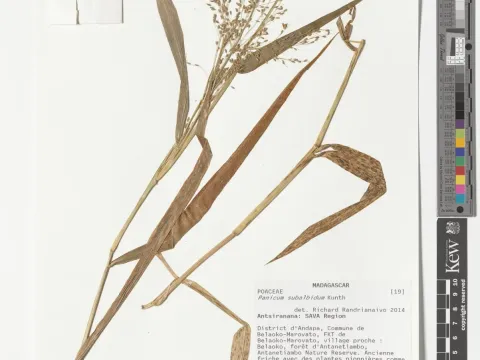
White millet
Panicum subalbidum
White millet (Panicum subalbidum) is a productive grass species within the Poaceae family, known for its adaptability to various tropical and subtropical environments. The species is characterized by a vigorous growth habit and a high capacity for biomass production.
What the section contains
White millet
In terms of climate, the plant thrives in warm, sunny regions with sufficient rainfall during the peak growing season. It exhibits significant drought tolerance, allowing it to maintain metabolic activity when other forage grasses might enter a period of dormancy.
Regarding soil preferences, it performs best on well-drained, fertile loamy soils. While it can adapt to diverse soil types, it performs poorly in compacted or waterlogged ground, which can lead to root system degradation and reduced yields.
Agricultural management of Panicum subalbidum involves ensuring proper plant density to allow for optimal aeration and light penetration. It responds well to balanced nutrient applications, specifically nitrogen, to maximize the nutritional quality of the forage.
The main agricultural use for this crop is as a forage resource for livestock, providing high-quality biomass for grazing or hay production. Its ability to regrow rapidly after harvesting makes it a valuable asset for sustainable pasture management.
The culture is susceptible to common fungal pathogens, including various smuts and rusts that affect the foliage. These diseases can impair the photosynthetic capacity of the plant and reduce the overall quality of the harvested biomass.
Insect pests, such as aphids and stem borers, are the primary biological threats to the crop. Integrated pest management strategies, including monitoring and biological control, are recommended to maintain plant health throughout the season.
Root rot, often associated with poor soil drainage, remains a common issue in areas with heavy rainfall. Ensuring that fields are properly levelled and drained is essential for preventing the spread of soil-borne pathogens in the root zone.
Crop rotation serves as a critical practice for managing disease pressure. By alternating Panicum subalbidum with non-grass species, farmers can break the life cycles of specific pathogens and pests that reside in the soil profile.
Chemical control measures should be employed sparingly and only when damage thresholds are exceeded. Focusing on plant vigor through proper fertilization helps the crop withstand minor pest attacks without the need for intensive synthetic intervention.