
Iseilema membranaceum
Iseilema membranaceum
Description
Growing requirements
Iseilema membranaceum, commonly known as a type of Mitchell grass, belongs to the Poaceae family. This perennial or annual grass is a cornerstone of the native rangelands in arid and semi-arid regions, providing essential cover and nutrition for livestock in harsh environmental conditions.
Native to Australia, this species is highly adapted to tropical and subtropical climates where rainfall is irregular. Its survival strategy involves a rapid vegetative growth phase triggered by rainfall, allowing it to complete its cycle and provide fodder before the onset of extreme drought conditions.
The grass is well-suited to heavy clay and loamy soils, which are characteristic of the floodplains and low-lying areas where it naturally thrives. It possesses an innate ability to tolerate structural soil changes and periodic inundation, making it a reliable choice for pasture stabilization in flood-prone rangelands.
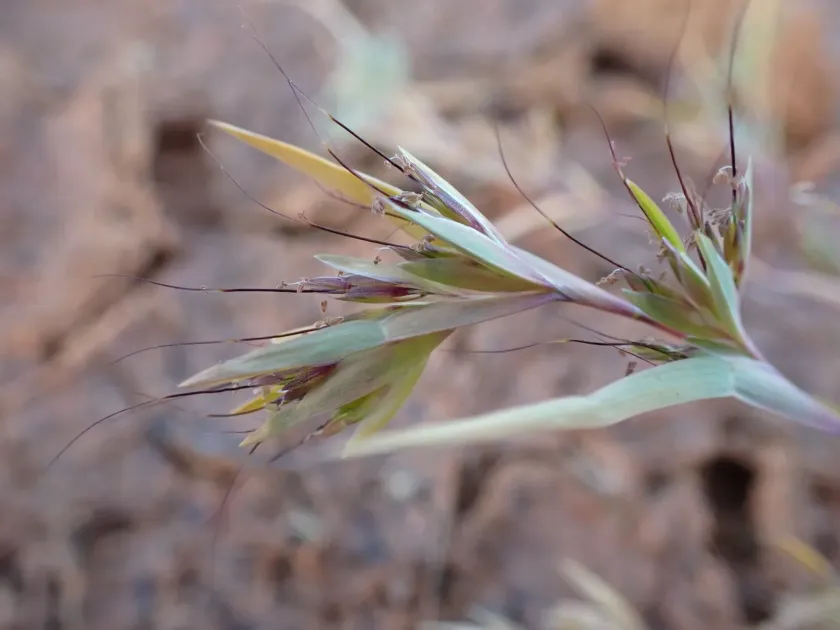
From a botanical perspective, the plant is characterized by its tufted habit and ability to produce high quantities of biomass. Its foliage is highly palatable and nutritionally dense, which is why it is extensively sought after by grazing sheep and cattle across its natural range.
Economically, Iseilema membranaceum is vital for sustainable livestock production. It remains highly palatable even when mature and partially dry, providing a critical source of winter feed in areas where green forage is seasonally unavailable, thus supporting animal weight gain.
Harvesting
Efficient management of this forage resource involves rotational grazing patterns that ensure the plant can replenish its root reserves. Farmers and graziers monitor the stands to prevent overgrazing, allowing the grass to set seed and maintain long-term productivity of the pasture area.