
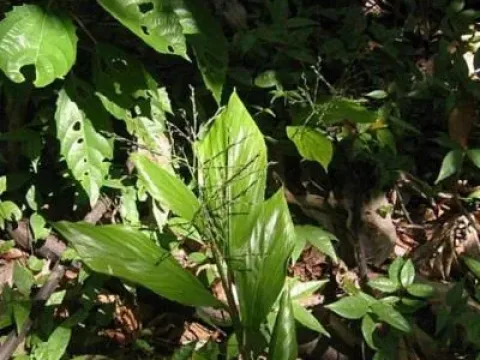
Pharus
Pharus P. Browne
Pharus (Pharus P. Browne) is a genus of perennial herbaceous plants belonging to the grass family (Poaceae) and specifically to the subfamily Pharoideae. This subfamily is recognized for its unique evolutionary history, representing an early branching point in the evolution of the grass lineage.
What the section contains
Pharus
The native habitat of Pharus is primarily the tropical forests of the Americas. These plants thrive in the understory of dense forests, where they have evolved to perform photosynthesis under low-light conditions, a strategy that sets them apart from most agricultural cereal crops.
The environmental requirements for Pharus include high soil moisture, consistent humidity, and rich, organic-matter-laden substrates. It is highly sensitive to desiccation and direct solar radiation, which precludes it from being grown in standard open-field agricultural systems.
Botanically, Pharus species are notable for their leaf morphology, which often displays distinctive cross-venation, a trait rarely seen in other grasses. Their reproductive strategy relies on hook-like trichomes on the fruit, which facilitate seed dispersal by attaching to passing forest animals.
While Pharus is not typically cultivated for grain or fodder, it serves as a critical model organism for botanical and phylogenetic research. Understanding its specialized adaptation to shaded tropical environments provides valuable insights for genetic improvement and diversification of the Poaceae family.