
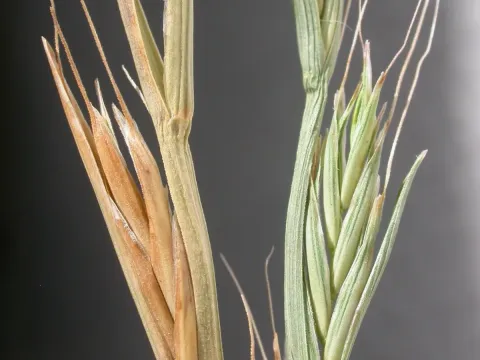
Persian ryegrass
Lolium persicum
Persian ryegrass is an annual grass, with sowing typically taking place in early spring once soil conditions are favorable and the frost risk has passed.
What the section contains
Persian ryegrass
The seeds should be sown at a shallow depth of approximately 1 to 2 centimeters to ensure rapid germination and prevent the depletion of energy reserves within the seed.
Seeding rates are adjusted based on the intended use; denser stands are prioritized for forage production, while lower rates are used for seed multiplication plots.
Proper seedbed preparation is critical, requiring a fine, firm tilth that facilitates uniform seed-to-soil contact and consistent water availability during emergence.
Rolling the field after planting is a highly recommended practice, as it helps retain soil moisture and encourages faster seedling establishment.
As a member of the Poaceae family, Persian ryegrass thrives in fertile, well-drained loamy soils with a pH ranging from neutral to slightly acidic conditions.
The species requires consistent moisture throughout the growing season but performs poorly in waterlogged soils, which can lead to root system decay.
It is moderately demanding of nitrogen fertilizer, which is essential for achieving vigorous vegetative growth and maximizing protein content in the biomass.
The plant displays strong ecological adaptability to temperate climates, showing good performance in regions where spring and early summer rainfall is reliable.
Exposure to direct sunlight is necessary for optimal development, as shading from other crops or trees can significantly limit its growth rate and tillering potential.
Yield potential of Persian ryegrass is heavily influenced by soil fertility levels and the timely application of split nitrogen fertilizers during the vegetative stage.
When managed effectively, this crop provides high volumes of high-quality forage, which is characterized by excellent palatability for cattle and sheep.
The ability of the crop to recover after cutting allows for multiple harvests during a single growing season, provided that moisture conditions remain stable.
Strategic nutrient management, specifically managing the availability of phosphorus and potassium, helps improve the overall stability and yield of the stand.
Research indicates that Persian ryegrass can consistently deliver competitive yields, making it an efficient choice for farmers focusing on intensive livestock feeding.
Common agricultural challenges for this grass include fungal pathogens like rust and powdery mildew, which often flourish in periods of high humidity and poor ventilation.
Insects such as aphids and various species of shoot flies can impact crop health; therefore, regular field scouting is recommended to assess potential damage.
Integrated pest management strategies, including the use of certified, clean seed, are essential for reducing the reliance on broad-spectrum chemical pesticides.
Maintaining a balanced crop rotation cycle helps break the lifecycle of specific pathogens that might otherwise build up in the soil over consecutive seasons.
Effective weed control is most successful during the early establishment phase, as the crop requires a clean start to dominate the canopy and shade out competitors.
For forage purposes, the crop should be harvested during the early heading stage to capture the optimal balance between total dry matter and nutritional quality.
If producing hay, the crop should be cut and allowed to dry in windrows with regular turning to ensure uniform moisture loss and prevent mold development.
Seed harvesting should occur when the heads are fully mature and the moisture content of the seeds begins to drop to acceptable storage levels.
Harvesting efficiency is improved by using specialized equipment that minimizes shattering losses, which is a common issue with many grass species during mature stages.
Post-harvest management involves cleaning the grain to remove inert debris and conditioning the seed to ensure safe storage through the winter months.