
Persian wheat
Triticum carthlicum
Description
Sowing dates
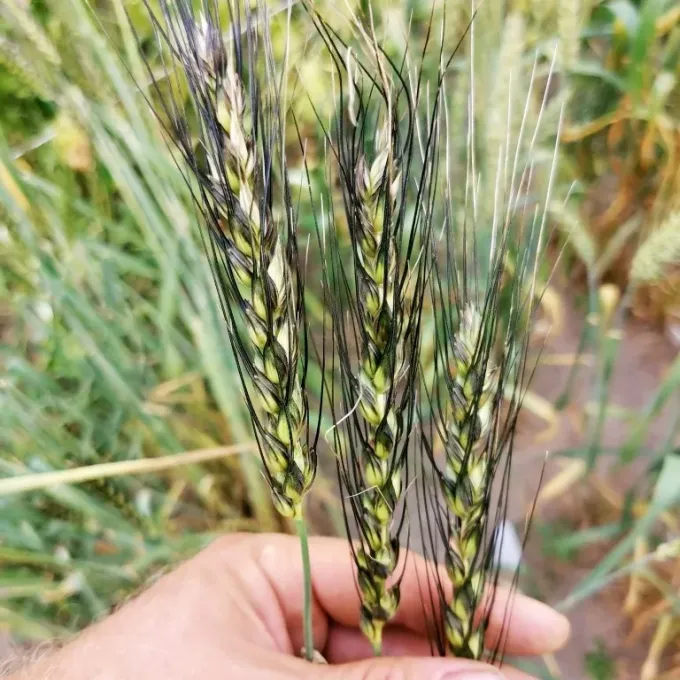
Persian wheat, botanically known as Triticum carthlicum, is a hexaploid wheat species that holds a significant place in the history of agriculture in the Caucasus region. It is valued for its resilience and unique grain characteristics.
The sowing season typically occurs in early spring, allowing the crop to establish itself before the onset of summer heat. Adequate soil temperatures, usually between 6 and 10 degrees Celsius, are required for uniform germination.
Preparing the seedbed involves fine-tuning the soil structure to ensure proper contact between seeds and the soil matrix. A depth of 3 to 5 centimeters is recommended for optimal emergence in typical field conditions.
Crop rotation is vital for the successful growth of this species. Planting after legumes helps replenish soil nitrogen, creating a nutrient-rich environment that supports the wheat throughout its developmental cycle.
Seeding rates must be calibrated based on local soil fertility and climate. Proper spacing prevents intra-species competition, ensuring each plant has enough room to develop a healthy root system and productive tillers.
Growing requirements
This species is well-adapted to high-altitude environments, thriving in regions with significant temperature fluctuations. It shows remarkable tolerance to cooler mountain climates, which sets it apart from common wheat varieties.
Soil requirements focus on high drainage and moderate nutrient levels. Clay-heavy soils that prone to waterlogging are detrimental to root development, making sandy-loam soils the preferred choice for cultivation.
Water management is crucial during the flowering and grain-filling stages. While the plant is drought-tolerant, consistent moisture during these phases significantly improves grain plumpness and final yield potential.
Neutral pH levels are ideal for nutrient uptake. If the soil is acidic, limestone applications should be used in the previous season to adjust the chemistry to a range of 6.5 to 7.5 for maximum growth.
Wind resistance is a biological strength of the species. Its sturdy straw structure allows the plants to stand firm during strong winds, preventing the lodging common in taller, less robust wheat varieties.
Yield
Persian wheat yields are generally stable, typically ranging from 2.5 to 3.5 tonnes per hectare under well-managed conditions. Its performance is highly dependent on the timely application of macro and micronutrients.
The grain is large and dense, containing high levels of protein and gluten. This makes it a preferred choice for specialized culinary applications, including artisanal baking and traditional flatbread production.
Optimizing yield requires careful attention to the fertilization schedule. Phosphorous and potassium should be applied during the early vegetative stage to ensure strong foundation for grain formation later in the season.
Effective weed management is essential for maximizing yield. Because the crop has a relatively slow early growth rate, keeping the field free of invasive grasses allows it to dominate the available light and space.
The harvest index for this species is highly favorable, with a high ratio of grain weight to total biomass, making it an efficient crop for sustainable farming systems.
Main diseases and pests
Fungal diseases, specifically rusts and powdery mildew, represent the primary threats to crop health. High humidity coupled with dense canopy growth creates ideal conditions for these pathogens to thrive.
Insects like cereal leaf beetles can significantly damage the leaf surface, reducing the plant's photosynthetic capacity. Integrated pest management strategies, including the use of pheromone traps, are recommended.
Fungicide treatments, particularly during the flag leaf stage, can protect the plant from late-season infections. This ensures that the plant retains its green leaf area until the grain is fully matured.
Seed treatment before planting is a fundamental practice to prevent soil-borne diseases. Using certified, disease-free seed is the first line of defense against many common cereal pathogens.
Sanitation practices after harvest, such as removing straw and deep plowing, disrupt the life cycle of overwintering pests, thereby reducing the need for intensive chemical intervention in the following year.
Harvesting
Harvesting should occur when the moisture content drops to 14 percent, signaling full maturity. Modern combine harvesters are highly effective at collecting the grain with minimal shattering losses.
Precision harvesting settings are necessary to maintain grain integrity. Excessive drum speed can cause mechanical damage to the kernel, which may affect the germination rate for future sowings.
Post-harvest drying is essential to prevent mold growth. Storing the wheat in cool, ventilated silos helps preserve the grain quality over long periods, protecting it from moisture-related spoilage.
Timing is everything; harvesting too early increases the risk of high-moisture spoilage, while waiting too long exposes the grain to potential weather damage and wildlife interference.
Quality checks post-harvest, such as protein testing and kernel analysis, ensure that the final product meets the standards required for both food production and seed banking programs.