
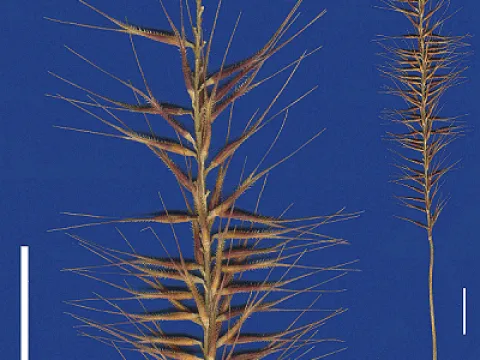
Perotis
Perotis
Perotis is a genus of grasses belonging to the Poaceae family, known for its adaptability to various tropical environments. Sowing typically occurs at the beginning of the rainy season, which facilitates natural germination and early establishment.
What the section contains


Perotis
In agricultural settings, the seeds should be sown shallowly due to their small size. Placing the seed too deep can prevent germination, so surface sowing followed by light soil compaction is the recommended technique.
Optimal soil temperature for sowing ranges between 20°C and 30°C. Sowing in cold soil leads to poor emergence rates and potential failure of the crop, making timing the most critical factor for success.
Seedbed preparation should involve creating a fine, weed-free tilth. Because Perotis is slow to establish, minimizing competition from other grasses during the first few weeks is essential for a uniform stand.
Depending on the intended use, sowing density may vary. For grazing purposes, a higher seed rate is often used to ensure rapid coverage, whereas for seed production, wider spacing is preferred to manage crop vigor.
Perotis thrives in well-drained soils, including sandy and sandy-loam types. It is particularly noted for its ability to grow in poor soil conditions where other, more nutrient-demanding species might fail.
Full sun exposure is a requirement for optimal biomass production. Partial shade reduces the density of the grass stand and may delay flowering, directly impacting the photosynthetic potential of the plant.
The plant is highly drought-tolerant, making it suitable for regions with erratic rainfall. However, supplemental irrigation can significantly boost growth rates during prolonged dry spells in the growing season.
Soil pH should ideally be in the neutral to slightly acidic range. Poor drainage is a significant limiting factor, as Perotis is highly susceptible to root decay when subjected to waterlogged conditions.
Temperature sensitivity is high; the crop requires a frost-free climate to survive and produce viable yields. Exposure to extreme cold can cause plant death, restricting its cultivation to tropical and subtropical zones.
The yield potential of Perotis is largely determined by soil fertility and rainfall distribution. Under ideal conditions, it provides a consistent, albeit modest, amount of forage material throughout the season.
In rotational grazing systems, the plant recovers effectively if allowed adequate rest periods. This ability to regenerate after defoliation makes it a valuable component of sustainable grassland management.
Biomass production can be improved through strategic nitrogen application, although the species is naturally adapted to survive in nitrogen-poor environments, which may limit the response to intensive fertilizing.
Harvesting efficiency depends on the growth habit of the local ecotype. Some varieties provide better leaf-to-stem ratios, which are preferred for high-quality hay production rather than simple pasture use.
Continuous monitoring of yield metrics helps in fine-tuning agricultural practices. While Perotis is not a high-intensity crop, its yield stability in marginal lands makes it a reliable asset for livestock farmers.
Fungal diseases, especially rusts, represent the primary biological threat to Perotis stands. These pathogens proliferate rapidly in high-humidity environments, necessitating good field ventilation and disease-resistant cultivars.
Pests such as grass-feeding insects, aphids, and mites can cause significant damage to the floral parts and leaves. Integrated pest management strategies are crucial to prevent yield loss during the flowering period.
Weed infestation during the seedling stage is a major constraint. Because the initial growth of Perotis is slow, mechanical weeding or the use of selective herbicides is often necessary to prevent overcrowding.
Overgrazing is a significant risk that can destroy the root system and suppress plant regrowth. Implementing a controlled grazing system is essential to maintain the long-term health and productivity of the field.
Preventative measures, including field sanitation and the removal of infected plant residues after harvest, can effectively reduce the inoculum load for the following season, ensuring better crop safety.
Harvesting for forage is ideally timed at the early heading stage to maximize nutritional value. Cutting too late results in lignified stems and lower digestibility for livestock, significantly reducing fodder quality.
For hay production, rapid drying in the field is necessary. Effective raking and tedding techniques help in reducing moisture content quickly, which preserves the quality and color of the hay before baling.
When harvesting seeds, timing is critical as they mature unevenly and shatter easily. Harvesting in the early morning or using desiccant agents can help synchronize maturity and minimize field losses.
Seed cleaning and sorting are necessary to remove debris and unwanted seeds. Proper drying before storage is mandatory to maintain seed viability for future planting and to prevent fungal contamination.
Finally, field management post-harvest is important. Removing remaining dry stubble helps prepare the site for the next cycle and prevents the buildup of pests or diseases in the dormant layer.