
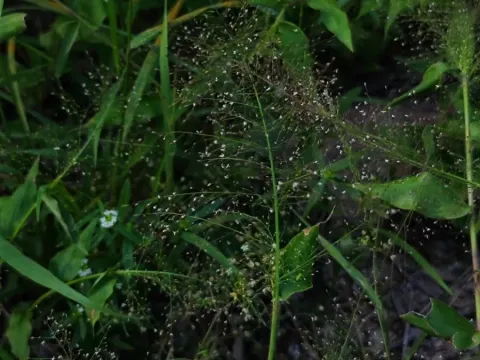
Panicum trichoides
Panicum trichoides
Panicum trichoides is an annual grass species belonging to the diverse Poaceae family. Commonly referred to in its native regions as a slender or hair-like panicum, it is recognized for its delicate inflorescence structure and thin, spreading stems, which typically reach a height of up to 80 centimeters.
What the section contains
Panicum trichoides
The origin of this species is primarily linked to the tropical and subtropical zones of the Americas. Due to its opportunistic nature, it has naturalized in various parts of the globe, colonizing areas such as forest clearings, moist riverbanks, and anthropogenically disturbed soils where competition from other vegetation is relatively low.
Botanically, the plant is characterized by its lanceolate leaves which feature fine hairs along the surfaces and margins. The panicle-type inflorescence consists of numerous fine, spreading branches that give the plant its characteristic airy appearance during the flowering and seed-setting stages.
The environmental requirements for Panicum trichoides include a warm, humid climate and well-drained, fertile soil. It is highly sensitive to frost, which limits its distribution to warmer climates. The species thrives in areas with consistent moisture availability, avoiding prolonged drought stress which typically halts its growth cycle.
In agricultural settings, this species is often managed as a weed due to its rapid growth and competitive potential against primary crops. However, in certain silvopastoral or low-input agricultural systems, it serves as a supplement to natural forage, providing a source of dietary roughage for livestock when harvested in the early growth stages.
Major threats to Panicum trichoides include common fungal pathogens like rusts and smuts, which often emerge during high humidity periods. These infections can lead to chlorosis and stunted growth, effectively reducing the overall health and biomass production of the plant population.
Insect pests, specifically aphids, mites, and various beetles, are known to feed on the foliage and developing seeds. These infestations can severely diminish the reproductive output of the plant and facilitate the entry of secondary diseases, making management critical in areas where it is considered an unwanted competitor.