
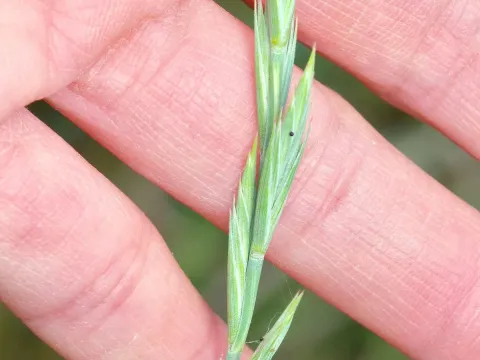
Western wheatgrass
Elymus smithii
Western wheatgrass is typically sown in early spring or late fall to capitalize on seasonal moisture. Establishing the crop requires a well-prepared seedbed, free from competition, to ensure the small seeds achieve proper soil contact.
What the section contains
Western wheatgrass
Seeding depth should be maintained between 1 to 2 centimeters. Using a drill with depth control mechanisms is recommended to ensure uniform emergence across the field, which is vital for long-term stand development.
Since the initial growth rate is relatively slow, weed management is essential during the establishment phase. Planting during the dormant season can often provide a head start against aggressive competitive weed species.
Firming the soil with a cultipacker after planting improves capillary water movement, which significantly increases germination rates. This step is particularly important in drier environments where moisture is limited.
Adequate seed density is necessary to form a dense stand that can suppress invasive species effectively over time. Monitoring the field for initial growth consistency allows for potential reseeding if germination is uneven.
Western wheatgrass, a member of the Poaceae family, is an incredibly resilient perennial grass native to the prairies of North America. It is widely recognized for its ability to thrive in challenging environments.
The plant demonstrates superior drought tolerance compared to many other forage grasses, thanks to its extensive rhizomatous root system. This allows it to persist even during prolonged periods of water scarcity.
It displays remarkable adaptability to diverse soil types, including heavy clays, sandy loams, and even saline or alkaline soils. This makes it a preferred choice for land reclamation projects.
Being a sun-loving species, Western wheatgrass performs best in full sun and open areas. It is sensitive to shade, which can reduce its vigor and overall biomass production significantly.
The grass is highly winter-hardy and can withstand extreme temperature fluctuations. Its physiological structure enables it to enter dormancy during harsh winters and resume growth rapidly once conditions become favorable.
Yield capacity depends on local moisture availability and management practices. In optimal conditions, the species produces high-quality forage that is palatable to livestock throughout the growing season.
When managed as a pasture crop, Western wheatgrass provides consistent regrowth after grazing. Its nutritional profile makes it an excellent source of protein for cattle and sheep, especially in range settings.
Fertilizer application, particularly nitrogen, can enhance biomass production. However, it is important to apply inputs judiciously to avoid environmental runoff and ensure long-term soil health.
Seed production is another aspect of its agricultural utility. Harvest yields for seeds depend largely on spring moisture and temperature stability during the heading stage.
The ability of Western wheatgrass to form a dense sod makes it an excellent choice for stabilizing disturbed soils, providing dual benefits of forage production and effective erosion control.
One of the primary benefits of Western wheatgrass is its inherent resistance to many common cereal crop diseases. This reduces the need for chemical interventions and promotes sustainable agricultural practices.
However, under conditions of high humidity or poor air circulation, powdery mildew or various rusts can appear. Maintaining proper stand density is the most effective preventative measure against these infections.
Insect pests like grasshoppers or aphids can become problematic during dry cycles. Regular monitoring of pest populations allows farmers to intervene only when necessary, keeping management costs low.
Young seedlings are occasionally vulnerable to soil-borne insects, such as wireworms. Seed treatment before planting provides an effective buffer against such early-stage threats.
Rotation strategies and integrated pest management are highly recommended to ensure the longevity of the stand and prevent the buildup of soil-borne pathogens over multiple years.
Harvesting for hay should ideally occur at the heading stage to maximize the balance between total biomass and nutrient quality. Harvesting too late can lead to increased fiber content and reduced palatability.
Seed harvesting requires patience, as the seed must reach full physiological maturity before cutting to prevent shattering. Using combines at appropriate settings minimizes waste during the process.
After cutting, the biomass must be cured in windrows to reach the required moisture content for safe storage. This helps prevent spoilage, mold development, and combustion in storage stacks.
The use of modern haying equipment significantly improves efficiency. Western wheatgrass stands are known for their longevity, often remaining productive for a decade or more with minimal maintenance.
Efficient harvest management ensures that the stand remains vigorous. By following sustainable cutting heights, producers can protect the growing points, ensuring rapid recovery for the next season.