
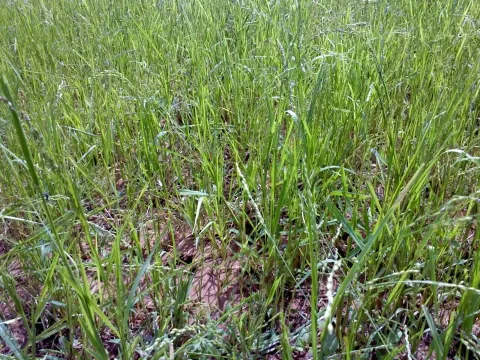
Attenuate panicgrass
Panicum attenuatum
Attenuate panicgrass is a warm-season crop, meaning its sowing window is strictly determined by soil temperatures. The optimal time for planting is once the soil at a depth of 5–10 cm has warmed to at least +12...+15°C.
What the section contains
Attenuate panicgrass
Successful establishment requires a well-prepared, moist seedbed. Sowing too early into cold soil significantly increases the risk of seed rot and poor germination rates, which can compromise the entire stand.
Standard row planting is the preferred method, ensuring uniform distribution of seeds across the field. The seeding rate is adjusted based on seed quality and soil nutrient levels, typically ranging from 15 to 25 kilograms per hectare.
Post-sowing rolling is a vital agronomic practice that improves seed-to-soil contact and draws moisture from deeper soil layers to the seed zone, facilitating more consistent emergence.
Applying small, starter doses of nitrogen and phosphorus fertilizers at the time of planting can significantly boost root development and accelerate the early growth stages of the seedlings.
The crop is highly dependent on light intensity, as it is a long-day plant. Insufficient sunlight will lead to spindly stems and a marked reduction in total biomass and overall harvest potential.
Attenuate panicgrass thrives in fertile loamy or sandy soils with a neutral to slightly acidic pH. It is critical to avoid waterlogged areas or fields with a high water table, as the roots are sensitive to poor aeration.
One of the key strengths of this species is its excellent drought tolerance, attributed to a robust root system. Despite this, steady moisture availability during the tillering and jointing phases is essential for maximum yield.
Temperature plays a crucial role, with the ideal range being +20...+28°C. Significant deviations or prolonged cold spells can hinder plant metabolism and slow down development during the vegetative stage.
Soil structure should allow for good aeration to meet the oxygen demands of the root system. Implementing a proper crop rotation system, ideally following legumes, is recommended to maintain soil health and productivity.
Yield performance is heavily dependent on soil fertility and the level of management. Under optimal conditions, the production of green forage can reach high levels, making it a valuable asset for livestock feeding programs.
Grain yield varies significantly based on environmental conditions and regional climate. With modern intensive farming techniques, growers can achieve stable and high production per hectare.
The biological potential of this grass allows it to be used effectively as a monoculture or within multi-species forage mixtures, where it often performs well due to synergistic interactions with other grasses.
Weed competition is a limiting factor, especially during early development. Proactive weed management during the first few weeks can increase total harvest yields by as much as 30 percent.
Strategic nitrogen fertilization during the active growth phase can significantly enhance the quantity of the harvested product. Timely nutrient application helps the crop reach its full genetic potential.
The primary threats to the crop include fungal diseases such as smut and various rusts. These pathogens thrive in high humidity and dense canopy conditions, which can be mitigated through proper spacing.
Insect pests, particularly cereal flies and aphids, pose a significant threat by damaging young shoots or spreading viral diseases. These infestations can weaken the plants and lead to stunted growth.
Effective disease management starts with seed treatment using appropriate fungicides. This foundational step is crucial for reducing the initial pathogen load and protecting the crop during the most vulnerable stages.
When pest populations exceed economic thresholds, targeted insecticide applications are necessary. Always follow label regulations to minimize the impact on non-target species and beneficial insects.
Cultural practices, such as mechanical inter-row cultivation, serve a dual purpose: they control weeds and disturb the lifecycle of various soil-borne pests, contributing to a healthier crop environment.
Harvest timing is dictated by the intended use of the crop. If intended for forage, mowing should occur during the boot stage to ensure the stems remain succulent and high in digestible nutrients.
When harvesting for grain, the process should begin once the crop reaches full maturity. Careful monitoring is required to prevent pre-harvest losses, as some varieties are prone to seed shattering.
A two-stage harvesting process is generally recommended to optimize grain quality. The plants are first cut into windrows to dry, followed by combining once the moisture content reaches a manageable level.
The cutting height should be carefully managed during haymaking to promote quick regrowth. Proper height ensures the base of the plant is not damaged, facilitating faster recovery for subsequent cuttings.
Post-harvest handling is critical for maintaining quality. Ensuring the grain is thoroughly cleaned and dried to a moisture content below 14% is necessary to prevent spoilage and ensure safe long-term storage.