
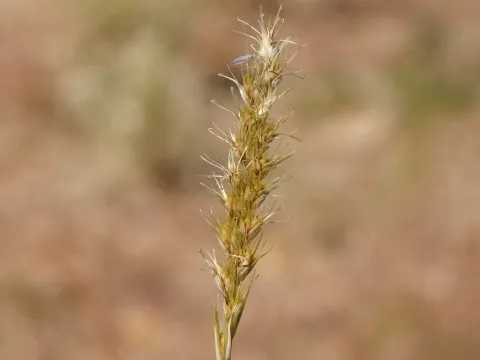
Astrebla squarrosa
Astrebla squarrosa
Astrebla squarrosa, known as bull mitchell grass, is a perennial warm-season grass belonging to the Poaceae family. In its natural habitat, it propagates primarily through seeds during the wet season when soil temperatures are conducive to germination.
What the section contains
Astrebla squarrosa
For agricultural cultivation, seeds are sown into prepared soil. Establishing good seed-to-soil contact and maintaining adequate moisture during the initial weeks is critical for developing a robust root system capable of deep water extraction.
The optimal sowing time corresponds to the period preceding the anticipated seasonal rains. While irrigation can allow for flexible timing, maintaining thermal stability remains a key factor for successful seedling establishment.
Seeding rates should be determined based on the intended use; lower densities are often preferred for seed production plots, whereas higher densities are used to establish dense, productive grazing swards.
Post-seeding rolling is highly recommended to improve capillary moisture movement, which significantly boosts germination rates in harsh and dry environmental conditions.
This species is well-adapted to extreme environmental conditions and thrives under intense solar radiation. It exhibits remarkable tolerance to high temperatures, making it a staple vegetation in many semi-arid regions.
Astrebla squarrosa prefers heavy clay soils that demonstrate strong water-holding capacity after sporadic rainfall events. It is notably tolerant of saline soil conditions, providing value for restoring degraded agricultural land.
The plant features a highly developed root system that reaches significant depths to access subsurface moisture. However, for maximum vegetative growth, the grass benefits from periodic rainfall or occasional water inundation.
Soil pH levels should generally range from neutral to slightly alkaline. The crop is particularly sensitive to waterlogging or stagnant water conditions in the root zone during cooler periods of the year.
To maintain long-term pasture productivity, rotational grazing strategies must be employed, avoiding heavy livestock pressure during severe drought cycles when the grass enters a period of deep dormancy.
The yield potential of bull mitchell grass is directly correlated with annual rainfall patterns. During favorable seasons, the plant produces substantial biomass, serving as a primary forage source for ruminants.
In natural ecological settings, dry matter yields typically range between 1 to 3 tonnes per hectare. Applying strategic nitrogen fertilization on cultivated plots can substantially enhance these biomass production levels.
The peak nutritional value of the foliage occurs during the active growth phase before flowering. Even after senescence, the standing stems provide essential roughage and structural fiber for livestock.
Seed yields can be variable and often require specific agrotechnical interventions to improve viability. Harvesting usually takes place in late summer once the seed heads have reached physiological maturity.
Weed management is crucial during the early stages of establishment, as the grass has a relatively slow growth rate in its first year and requires protection from competitive invasive species.
Major threats to the crop include locust infestations, which can rapidly defoliate large grazing areas. Swift monitoring and localized management are essential to prevent significant economic damage.
Fungal diseases, such as rust and various smuts, may occur during periods of high humidity. Regular field scouting allows for early detection and the implementation of appropriate control measures.
Specific mites and larvae can damage reproductive structures, reducing seed yield and limiting the plant's capacity for natural reseeding. Management should focus on maintaining overall plant vigor.
Overgrazing during drought periods is a severe threat that leads to the degradation of the root system and thinning of the sward, which invites opportunistic weeds to colonize the pasture.
- Implement rotational grazing to prevent sward degradation.
- Monitor foliage regularly for signs of pest or pathogen activity.
- Avoid heavy grazing pressure during the dry season.
- Manage weed populations during the initial establishment phase.
For hay production, the green biomass should be harvested during the stem elongation phase, before the material becomes too lignified. This timing ensures optimal protein content and digestibility for livestock.
Seed harvesting should be performed at full maturity when the seed heads exhibit a straw-colored appearance. Timely operations are critical to prevent excessive seed shedding on the ground.
Mechanical harvesting requires equipment calibrated for small-seeded species. The collected material must be cleaned and dried to appropriate moisture levels to ensure long-term viability during storage.
When used for grazing, livestock perform the harvest. The key to sustainable management is adjusting stocking rates to allow the plant sufficient recovery time between grazing sessions.
Post-harvest, maintaining some stubble in the field is beneficial as it helps preserve soil moisture and protects the crown of the plant from extreme heat and direct sun exposure.