
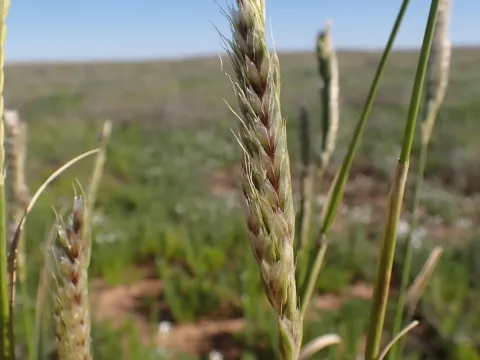
Astrebla
Astrebla
Astrebla is a long-lived perennial grass that typically regenerates through natural seeding in its native grassland environments.
What the section contains


Astrebla
When artificial sowing is required, seeds should be planted at the onset of the rainy season to ensure adequate moisture for germination.
A shallow sowing depth of 1 to 2 centimeters is crucial for success, as the seeds are small and require minimal soil coverage to sprout effectively.
Establishing firm contact between the seeds and the soil surface helps maximize water absorption from early rainfall events.
Successful stands often rely on the grass's ability to self-seed, which provides a long-term, sustainable forage source with minimal human intervention.
Known as Mitchell grass, Astrebla is a member of the Poaceae family, widely recognized for its dominance in arid and semi-arid Australian landscapes.
This grass thrives in heavy clay soils that have high water-retention capacity, which is essential for survival during prolonged dry spells.
It exhibits remarkable heat tolerance, maintaining its physiological functions even under extreme sunlight and high temperature conditions.
The plant features a deep root system that anchors it firmly and allows it to exploit moisture from deep within the soil profile.
Astrebla is highly adapted to irregular rainfall patterns, showing a rapid growth response when water becomes available after drought periods.
The forage yield of Astrebla is highly variable and depends on annual rainfall totals and the intensity of grazing pressure applied to the land.
As a highly nutritious forage, it is particularly valued for cattle and sheep production, providing essential nutrients even in the cured (dry) state.
Sustainable grazing management, involving rest periods, allows for significant biomass accumulation during favorable seasons.
Nutritional value peaks during the early growth stages, making it an excellent grass for livestock weight gain and maintenance.
Proper pasture rotation ensures that the root reserves of the grass are maintained, supporting high annual production across the landscape.
The primary threat to Astrebla pastures is overgrazing, which can degrade the root system and lead to a permanent loss of pasture density.
Locust swarms are a significant pest, capable of defoliating large areas and causing temporary but severe damage to the forage supply.
Invasive weed species compete with Astrebla for space and resources, potentially altering the composition of the native grassland ecosystems.
Soil erosion caused by excessive livestock trampling can remove the nutrient-rich topsoil layer, hindering the grass's ability to recover.
While the plant is generally hardy, fungal issues can occur in unusually humid conditions, though these are typically minor in its preferred arid habitat.
Hay production from Astrebla requires careful timing, ideally during the early flowering phase to ensure the best balance of yield and quality.
Cutting height must be carefully regulated; leaving at least 10 centimeters of stubble is necessary to support rapid regrowth of the plants.
Drying the cut grass in the field is usually efficient due to the arid environment, resulting in high-quality hay suitable for supplemental feeding.
Grazing serves as the most common method of harvest, requiring rotational schemes to prevent over-utilization of the valuable perennial clumps.
Managing the harvest involves prioritizing the long-term health of the grassland over short-term biomass gains to ensure future productivity.