
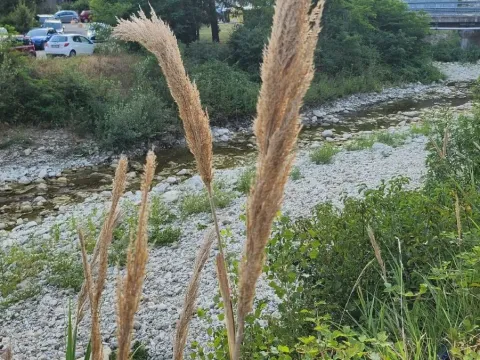
Arundo plinii
Arundo plinii
Arundo plinii is a robust perennial grass species belonging to the Poaceae family. Often confused with its larger relative, the common giant reed, this species offers unique growth habits and adapts well to specific temperate and Mediterranean environments.
What the section contains
Arundo plinii
The native range of this plant encompasses Southern Europe and parts of the Mediterranean basin. It thrives in regions characterized by mild winters and long growing seasons, where it can utilize heat to accumulate significant biomass through rapid lignocellulose development.
This crop has moderate requirements regarding soil quality but shows remarkable resilience. It prefers deep, fertile, and well-drained soils, yet it can be successfully established on marginal lands, including slopes and areas with varying levels of soil salinity.
Water availability is critical during the establishment phase. During the first year, irrigation may be necessary to ensure the root system is sufficiently developed. Once established, the plants demonstrate high tolerance to transient drought conditions.
A successful cultivation strategy involves full sun exposure. Shaded areas significantly reduce the net biomass yield, so proper spacing is essential to ensure that every individual plant receives adequate solar radiation throughout the peak summer months.
The biomass yield of Arundo plinii is considered high, making it a viable candidate for bioenergy and industrial fiber production. The plant effectively converts sunlight into structural material, resulting in high annual yields of dry matter per hectare.
Harvesting is typically conducted annually during the dormant season. By harvesting when the leaves have dried and the moisture content in the stems is at its lowest, farmers can ensure the highest quality feedstock for thermal processing or paper manufacturing.
The durability of the plant allows for a single plantation to remain productive for many years, often exceeding a decade. This longevity contributes to a high return on investment, as the need for annual soil cultivation and replanting is eliminated.
Yield results are maximized through consistent management practices. Applying organic or mineral fertilizers during the onset of the spring growth phase can significantly boost stem density and total harvested weight compared to unfertilized plots.
Yield and production factors:
- Consistent dry matter accumulation.
- High efficiency in renewable resource production.
- Significant reduction in land preparation costs over time.
Arundo plinii is naturally endowed with strong defensive mechanisms against common pests. Its tough, fibrous stems and rapid growth rate typically allow it to outcompete weeds and resist many conventional plant diseases that plague cereal crops.
However, like any agricultural commodity, it is not entirely immune to threats. Poorly drained fields during wet winters can lead to rhizome rot, emphasizing the importance of selecting suitable sites with adequate drainage to prevent physiological stress.
Insects such as stem-boring moths may present a localized threat. Integrated pest management strategies, including the introduction of natural predators or timing the harvest to interrupt the pest life cycle, are usually sufficient to maintain healthy crop conditions.
Weed competition is only a significant risk during the initial planting phase. Once the plant has developed a strong root system and reached a height where it shades the ground effectively, it creates a self-sustaining environment that discourages weed growth.
Maintaining crop health begins with using disease-free rhizomes for propagation. By ensuring that the initial planting material is of high quality and that the field is kept clean during the first season, farmers can ensure long-term productivity and stability.