
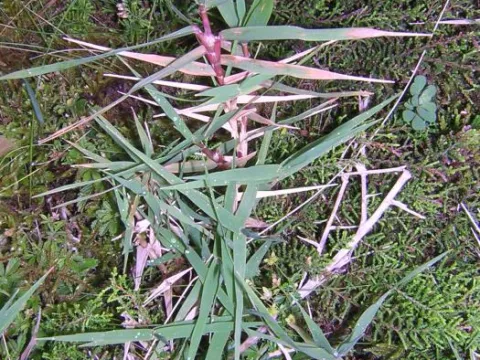
Holcus rigidus
Holcus rigidus
Holcus rigidus is a perennial grass species that is typically sown in early spring when the soil temperature consistently reaches 8–10 degrees Celsius.
What the section contains
Holcus rigidus
Autumn sowing is also a viable option in regions with mild winters, allowing the seeds to undergo natural stratification, which often results in more vigorous growth.
The seeds should be planted at a shallow depth of 1 to 2 centimeters. Proper seedbed preparation is essential, as the fine seeds require good contact with the soil.
Row or narrow-row sowing methods are recommended to ensure uniform distribution and to provide each plant with sufficient space for root development.
Post-sowing rolling of the soil is highly advised. This practice helps to retain moisture in the upper soil layer, which significantly improves germination rates.
As a member of the Poaceae family, Holcus rigidus is well-adapted to various environmental conditions, preferring moderately moist and well-drained soils.
The plant exhibits good winter hardiness and can tolerate temperature fluctuations, making it suitable for temperate climates with cool springs.
The ideal soil pH for this grass ranges from 5.5 to 7.0. It thrives in loamy or sandy loam soils that provide sufficient aeration for its fibrous root system.
Fertilization is crucial during the early stages of growth, particularly with nitrogen, to encourage the development of a dense vegetative cover.
While the plant is relatively resilient, extreme drought can slow its growth rate. Supplemental irrigation during dry periods can significantly boost forage production.
The yield potential of Holcus rigidus is influenced by soil fertility, moisture availability, and the frequency of harvesting throughout the growing season.
Under favorable management practices, the crop can provide two full harvests of green mass per year, ensuring a steady supply of fodder.
Integrating this grass into mixtures with legumes can enhance both the yield and the protein content of the forage, creating a more nutritionally balanced feed.
Seed production requires careful management of the stand density. Proper weed control during the early stages is essential to ensure high-quality yields.
Annual yields of dry matter typically range from 3 to 5 tons per hectare, depending on the intensity of the agronomic practices applied by the producer.
Common fungal diseases such as rust and powdery mildew can affect the stands, particularly in humid conditions with poor air circulation between plants.
Insect pests including aphids and various grass-feeding larvae can damage leaves and stems, potentially reducing the overall photosynthetic capacity of the plants.
Integrated pest management strategies are recommended, focusing on maintaining field hygiene and monitoring the crop during peak growth periods.
The use of certified seeds and maintaining appropriate spatial separation between different grass species helps in preventing the spread of systemic diseases.
Strategic harvesting can also act as a control measure, as it disrupts the life cycle of many pests and reduces the accumulation of inoculum in the field.
For high-quality green fodder, the crop should be harvested before the flowering stage, when the nutrient concentration is at its peak and the fiber is tender.
Hay production requires harvesting during full bloom. Proper drying and handling are necessary to preserve the essential nutrients and prevent spoilage.
Seed harvesting is performed using combine harvesters when the seeds reach maturity, ensuring that the moisture content is low enough for safe storage.
Post-harvest conditioning, including thorough cleaning and drying of the seeds, is vital for maintaining high germination potential for subsequent planting seasons.
Regrowth (aftermath) can be utilized for light grazing or as a final cut of the season, provided that the soil is not overly saturated or damaged by livestock.