
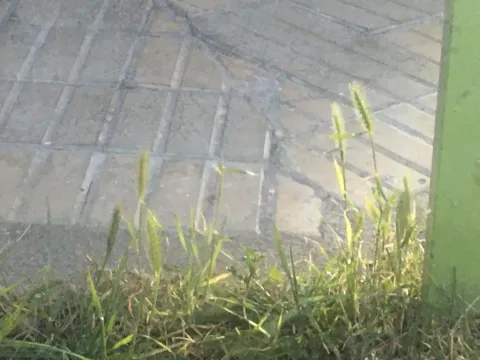
Hordeum euclaston
Hordeum euclaston
Hordeum euclaston is a perennial grass species belonging to the Poaceae family. This specific variety is native to the South American continent, with its natural range primarily concentrated in the grassland regions of Argentina and Uruguay, where it thrives in diverse open habitats.
What the section contains
Hordeum euclaston
The plant is highly adapted to semi-arid and temperate climatic conditions. It exhibits notable resilience to drought, making it a robust species capable of maintaining vegetative growth in environments where many other grasses would suffer significant water stress.
In terms of edaphic requirements, this grass prefers well-drained soils. It performs best in sandy or rocky substrates where aeration is optimal. Proper site selection is crucial, as the root system of Hordeum euclaston is highly sensitive to waterlogging and poor soil oxygenation.
Botanically, this species is characterized by its distinct culm structure and inflorescence development. The plant manages to sustain itself through an efficient root network, allowing it to compete effectively in native plant communities while providing a stable ground cover.
Economically, Hordeum euclaston is primarily recognized for its utility in pastoral systems. It serves as a valuable forage resource for livestock, particularly in extensive grazing operations. Its ability to regenerate quickly after grazing makes it an important ecological component for soil stabilization and fodder production.
Like many species in the Hordeum genus, this plant is susceptible to common fungal pathogens, including various strains of rust (Puccinia spp.) and powdery mildew. These infections typically occur under high humidity conditions, potentially limiting the vigor of the grass stand.
In terms of insect threats, cereal aphids and various coleopteran pests are known to impact the health of the plant. Significant infestations can weaken the tillering capacity, thereby reducing the total biomass production and the overall longevity of the perennial grass population.