
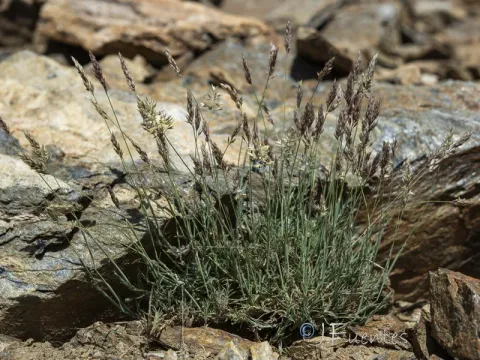
Holcus caespitosus
Holcus caespitosus
Holcus caespitosus is a perennial grass species belonging to the Poaceae family. It is characterized by its distinct tufted growth habit, which allows it to thrive in challenging environmental conditions such as high-altitude slopes.
What the section contains
Holcus caespitosus
The plant originates from mountain ecosystems and is widely recognized for its high tolerance to temperature fluctuations. It typically occupies regions with well-drained, rocky, or loamy soil types where other grass species struggle to establish.
Regarding climate requirements, the species prefers temperate, cool climates with sufficient moisture. However, it displays remarkable resilience to temporary droughts due to its deep and well-developed root architecture.
Botanically, it features narrow, often pubescent leaves and compact, dense inflorescences. The dense root system is not only crucial for nutrient uptake but also acts as an effective soil stabilizer in erosion-prone areas.
In terms of economic utility, this grass serves as an essential component of high-altitude pastures. Its ability to provide early spring growth makes it highly valuable for livestock grazing schemes in mountainous territories.
The species is generally robust, but it can be susceptible to rust fungi, especially in areas with poor ventilation and high humidity. Proper field management is key to preventing widespread fungal outbreaks.
Common insect pests include grass aphids and stem borers, which can impact the biomass yield. Monitoring pest populations throughout the growing season is recommended to maintain optimal pasture health.
Root rot represents a potential threat if the soil remains waterlogged for extended periods. Ensuring good drainage is the primary agrotechnical measure to mitigate this physiological and pathological risk.
Weed competition is usually minimal once the bunch grass has established a dense cover. However, invasive perennial weeds should be managed through controlled grazing or selective mechanical cutting.
Healthy pastures require periodic nutrient replenishment, particularly in poor alpine soils. Fertilization should be balanced to ensure the grass remains competitive against non-desirable invasive species.