
Munroa
Munroa
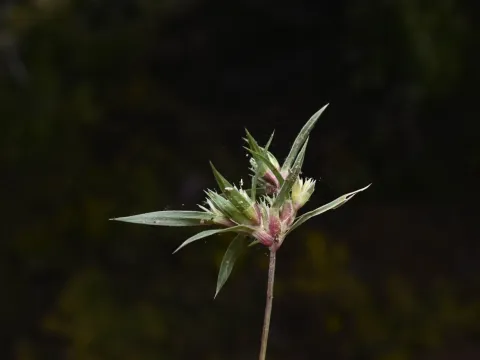
Munroa is a genus of small, prostrate grasses belonging to the Poaceae family, widely distributed in arid regions.
What the section contains

Munroa
Sowing typically occurs in the spring season when soil temperatures reach stable levels sufficient for seed germination.
Seeds should be sown at a shallow depth to ensure they receive adequate light, which is crucial for triggering their growth process.
In natural conditions, Munroa spreads through the natural shedding of seeds during the late summer and autumn periods.
Proper seedbed preparation involves ensuring minimal competition from other vegetation to allow seedlings to establish their root systems.
Munroa is an extremely hardy xerophyte, uniquely evolved to thrive in high-temperature and water-scarce environments.
The plant demonstrates a preference for well-drained, sandy, or gravelly soils common in semi-arid and desert landscapes.
Total solar exposure is essential for the healthy development of this grass; it cannot tolerate shade from trees or shrubs.
It is capable of withstanding extreme diurnal temperature fluctuations, often surviving in soils that heat up intensely during the day.
Requirements for soil nutrients are relatively low, allowing the plant to colonize soils that are nutrient-poor and unsuitable for traditional crops.
While not a high-biomass crop, Munroa provides essential ecosystem services including soil stabilization and erosion prevention.
The forage yield is modest, yet it remains a critical food source for livestock in arid regions where other grasses fail to survive.
In a managed pasture system, the plant maintains a low-profile growth habit that resists overgrazing better than taller species.
The nutritional value is maintained throughout the dry season, providing a stable source of sustenance when green forage is unavailable.
Yield stability is the primary advantage of this genus, ensuring ground cover even during prolonged drought cycles.
The primary threats to Munroa populations include habitat fragmentation and the encroachment of invasive alien plant species.
While resistant to most common crop diseases, excessive humidity and waterlogging can lead to fungal issues within the crown.
Insect pests, particularly locusts and grasshoppers, can cause significant damage to the plant if infestations are severe.
Overgrazing by livestock can lead to soil compaction, which hinders the natural regeneration cycle of the grass clumps.
Fire is a major hazard in the ecosystems where Munroa is found, although the plant often recovers from the root system after a burn.
Harvesting Munroa for seed is a delicate process because the seeds mature and disarticulate over an extended period of time.
Most agricultural management focuses on utilizing the plant through controlled grazing rather than harvesting the biomass.
When seed harvesting is necessary, manual collection or specialized pneumatic seed harvesting equipment is often required.
The plants are generally left in the field as part of the natural landscape to protect the soil from wind and water erosion.
Post-harvest storage of seeds requires dry and well-ventilated conditions to maintain long-term viability of the germplasm.