
Munj grass
Saccharum benghalense
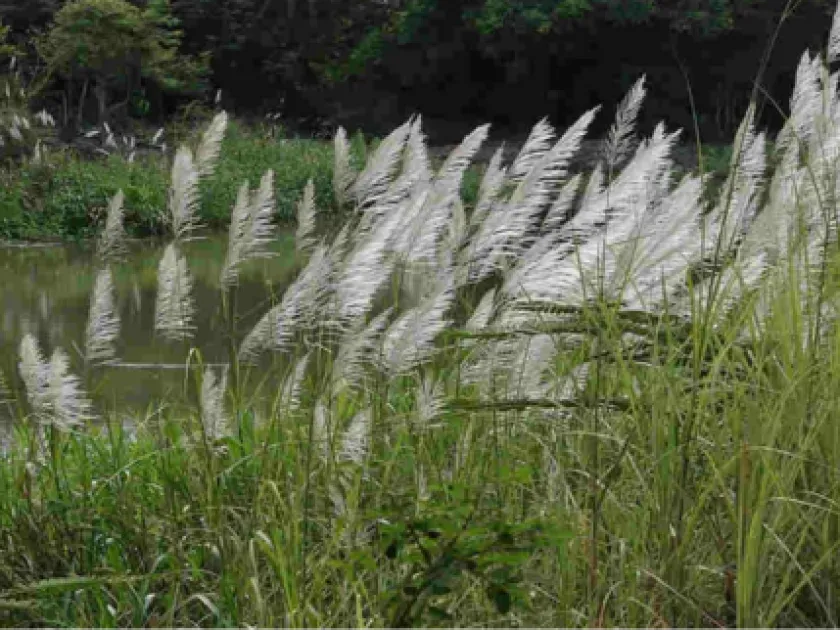
Description
Growing requirements
Munj grass (scientific name Saccharum benghalense) is a perennial grass species belonging to the Poaceae family. This robust plant forms large, dense clumps, characterized by tall, sturdy stems that are typical for the Saccharum genus, widely adapted to diverse environmental conditions.
The native range of this plant encompasses various parts of South Asia, specifically the Indian subcontinent. It is traditionally found in riparian zones and alluvial plains, where it thrives under conditions of sufficient moisture and abundant sunlight throughout the long growing season.
When it comes to soil requirements, the plant is adaptable but prefers deep, well-drained loamy or sandy soils. While it possesses an inherent tolerance to varying soil nutrient levels, it responds significantly to organic matter enrichment, which enhances stem density and total biomass production.
Climatic requirements focus on heat and light. As a tropical to sub-tropical grass, it requires high thermal sums for optimal development. Temperatures between +22°C and +30°C are ideal for active growth phases, and it can withstand extreme heat if water is available during the initial establishment.
Proper agronomic management involves clearing the land of perennial weeds before planting. Once established, the root system is extremely efficient, allowing the plant to persist for several years without the need for extensive soil preparation or annual reseeding operations.
Yield
The primary economic use of Munj grass is focused on its structural and fibrous properties. The internodes of the stems are used to manufacture ropes, mats, screens, and rustic furniture. The plant is considered a significant resource for rural craft industries in its native range.
Biomass yield is generally high when managed under semi-intensive agricultural systems. Periodic harvesting of mature stems does not typically harm the rootstocks, allowing for multiple harvests from a single planting, which maximizes the long-term productivity per hectare.
Environmental application is another vital aspect of this culture. Munj grass is frequently employed as a windbreak and a soil stabilization agent. Its extensive root system prevents land degradation on embankments and marginal soils, effectively reducing erosion caused by wind or runoff.
Industrial interest in Saccharum benghalense involves the production of cellulose and paper pulp. Given its high fiber content and structural integrity, it serves as a viable alternative raw material for local paper-making facilities, contributing to sustainable development.
By producing massive amounts of dry matter annually, the crop also functions as a source of biomass energy. When harvested at the end of the season, the dried stems can be utilized as a solid biofuel, provided proper moisture management techniques are implemented.
Main diseases and pests
Disease threats in Munj grass plantations are mainly linked to high-humidity environments. Leaf spot diseases caused by fungal pathogens can affect photosynthetic activity, especially in over-dense clusters that lack adequate airflow or proper spacing during the early stages of growth.
Insect pests include stem borers that can damage the internal structure of the stalks, thereby reducing the quality of the fiber. Integrated Pest Management (IPM) strategies, which prioritize natural predators and biological controls, are recommended over heavy chemical reliance.
Root rot is a major risk factor in areas with poor drainage or during prolonged periods of waterlogging. Ensuring that the site has natural or artificial drainage is critical for maintaining healthy plantations and preventing the spread of opportunistic pathogenic soil fungi.
Weed competition is most detrimental during the initial planting phase. Young stalks grow relatively slowly and are susceptible to encroachment by aggressive invasive weeds. Regular manual or mechanical weeding is necessary until the grass canopy is fully established and shades out competitors.
Fire management is an essential part of the agricultural cycle for this species. As a tall grass that produces high amounts of combustible dry material, firebreaks must be maintained around the field to protect the biomass from accidental ignition during the dry season.