
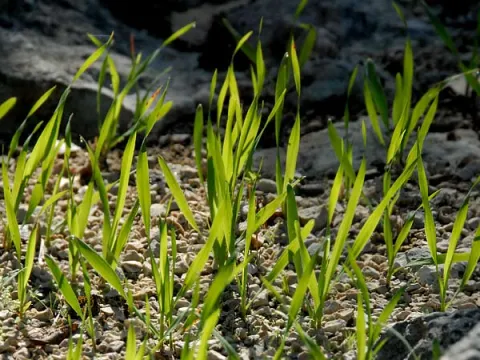
Murphy oat
Avena murphyi
Murphy oat (Avena murphyi) is an endemic diploid oat species native to the southern regions of Spain and Morocco. Its development cycle is closely linked to Mediterranean climate patterns, so sowing is typically aligned with the onset of autumn-winter rains.
What the section contains
Murphy oat
Unlike commercial varieties, this wild species exhibits high adaptability to periods of irregular moisture. Sowing times must account for the need to ensure seed germination during the mild temperatures characteristic of the Mediterranean autumn.
Choosing the optimal time for planting is also critical for establishing a robust root system, which is a prerequisite for the plant's survival during severe summer droughts.
The seed material of this species is characterized by natural dormancy, which may require specific pre-treatment or stratification conditions to achieve uniform field emergence.
Adjusting the seeding depth is essential, as the small size of the seeds requires shallow placement to facilitate oxygen access and successful sprouting.
This crop belongs to the Poaceae family and demonstrates exceptional resilience to adverse abiotic factors. It prefers well-drained calcareous soils, which are typical for its natural habitat and range.
Murphy oat requires a high level of insolation for the proper completion of all vegetative stages and the development of reproductive organs. It reacts negatively to waterlogging, making sites with high water tables unsuitable for cultivation.
A key feature is its high tolerance to moisture deficit, allowing the plant to complete its life cycle before the arrival of peak summer heat.
The temperature range for optimal development is moderate; the plant can withstand occasional light night frosts but is highly sensitive to extreme cold conditions.
Fertility requirements for this species are lower than those for bred oat varieties, although small applications of potassium fertilizers can help strengthen cell walls and improve overall plant vigor.
The main biological threats to Avena murphyi include rust fungi, which are common to cereal crops and can thrive during periods of high humidity in the spring.
In dense stands, the risk of powdery mildew increases, which significantly reduces the photosynthetic activity of the leaf blades and slows down overall plant development.
Among pests, cereal flies and aphids pose the greatest danger, as they can damage young seedlings and extract sap from stems during the elongation phase.
- Crown rust (Puccinia coronata)
- Powdery mildew
- Cereal aphids
- Frit fly
To control the spread of pathogens, it is recommended to implement crop rotation and avoid monoculture cultivation on the same land for several consecutive years.