
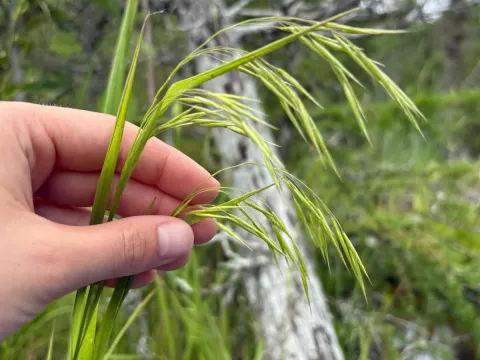
Fringed brome
Bromus ciliatus
Fringed brome (Bromus ciliatus) is a perennial grass species belonging to the Poaceae family. Native to North America, this plant is naturally found in moist forests, meadows, and along the banks of lakes and streams.
What the section contains
Fringed brome
The plant features a robust root system, allowing it to thrive in various soil types, ranging from sandy soils to heavier loams. It is particularly valued for its shade tolerance, which is a distinctive trait compared to many other forage grasses.
Fringed brome is highly winter-hardy and capable of growing in temperate climates with cold winters. It prefers moist soil conditions and is often used in areas where other grasses may struggle due to lower light availability.
In terms of agricultural management, this grass is appreciated for its rapid growth in the early season. It maintains nutritional value for a considerable period, making it a reliable option for livestock feeding programs.
Its primary agricultural uses include hay production and grazing for cattle. Due to its dense root system, it is also frequently utilized for soil conservation and erosion control on disturbed lands and stream banks.
Like many species in the Bromus genus, Fringed brome can be susceptible to rust diseases, especially under conditions of high humidity. Proper field drainage and spacing are essential to maintain airflow and reduce disease incidence.
Common pests include grass flies and aphids, which can damage young seedlings or stunt vegetative growth. Regular field monitoring is recommended to ensure that pest populations do not reach economic threshold levels.
Powdery mildew may occur in dense or poorly ventilated stands. To minimize this risk, farmers should avoid excessive nitrogen application, which can cause overly lush growth and create a favorable microclimate for fungal development.
Weed competition during the establishment phase is a major challenge, necessitating proper site preparation and weed control measures. Using certified, high-quality seeds is the first step in building a healthy and resistant stand.
Overall, Fringed brome shows good resilience if managed correctly. By ensuring a balanced nutrient program and regular inspection, producers can mitigate most risks associated with pests and diseases, ensuring sustainable forage production.