
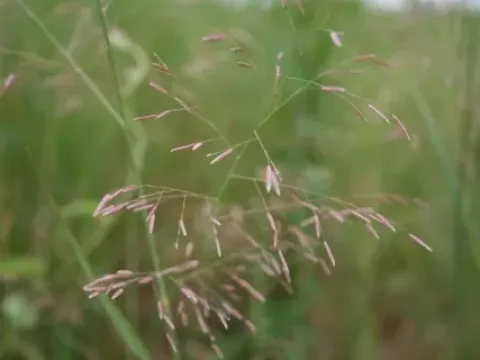
Eragrostis tremula
Eragrostis tremula
Eragrostis tremula, a member of the Poaceae family, is a versatile grass species primarily utilized in warm-climate agriculture.
What the section contains
Eragrostis tremula
The optimal sowing time aligns with the arrival of the wet season, ensuring that the soil is sufficiently warm, ideally above 20°C, to trigger germination.
Given the very small size of the seeds, they should be sown on the surface or buried at a minimal depth to allow adequate light exposure.
Maintaining a consistent moisture level during the first few weeks after sowing is crucial for the establishment of the root system.
Proper row spacing is recommended to balance the need for dense cover and the requirement of individual plants for space and nutrients.
This species thrives in well-drained, sandy to loamy soils, showing significant resilience to poor soil fertility compared to other forage grasses.
It is highly sensitive to waterlogging, necessitating fields with good topography or drainage systems to prevent root suffocation during heavy rains.
Eragrostis tremula is characterized by its high tolerance to heat and dry spells, making it an excellent candidate for semi-arid environments.
Full sun exposure is a fundamental requirement; the grass does not perform well in shaded areas where its growth becomes thin and weak.
The preferred soil pH range is slightly acidic to neutral, which optimizes the bioavailability of essential macro and micronutrients.
The forage yield of Eragrostis tremula depends heavily on seasonal rainfall and the implementation of appropriate nitrogen-based fertilization.
It is capable of providing multiple cuts per season under managed conditions, contributing significantly to annual fodder stocks.
The nutritional profile of the hay is balanced, providing adequate protein and energy for grazing livestock, especially when harvested at the vegetative stage.
When used in rotational grazing systems, the grass demonstrates a strong ability to regenerate quickly, increasing the total carrying capacity of the land.
Seed production is prolific, and with proper management, farmers can achieve high yields, allowing for cost-effective expansion of cultivation areas.
Fungal diseases related to high humidity represent the primary biotic threat, especially in dense stands with poor airflow.
Common agricultural pests such as aphids and stem-boring insects may target young plants, though significant damage is rarely observed in healthy, vigorous stands.
Overgrazing poses a physical threat to the stand's longevity, as it depletes the root reserves needed for the plant to survive the dry season.
Competitive weeds can suppress the grass during its early establishment phase, making early-season weed control an essential agronomic practice.
Overall, the plant is remarkably hardy, and its natural defensive mechanisms reduce the need for intensive chemical interventions.
For the best nutritional quality, the grass should be harvested before the panicles reach full maturity and the stems become lignified.
When producing hay, mechanical drying should be managed to retain leaf integrity, as the leaves contain the bulk of the digestible nutrients.
Seed harvesting requires careful timing, as the seeds shatter easily once the panicles are fully ripe and dry.
Specialized equipment settings, including reduced air blast in combines, are necessary to prevent the loss of fine seeds during the threshing process.
Stored fodder must be protected from humidity and heat to prevent degradation of quality and to maintain palatability for livestock.