
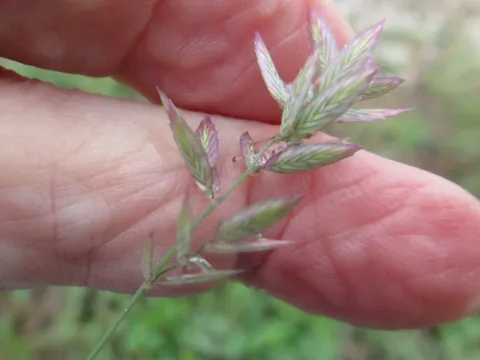
Eragrostis secundiflora
Eragrostis secundiflora
Sowing Eragrostis secundiflora is recommended during the spring period, once the soil has warmed sufficiently and the risk of nocturnal frost has passed. The optimal soil temperature for germination is between 18 and 22 degrees Celsius.
What the section contains
Eragrostis secundiflora
Given the small size of the seeds, it is crucial to pay attention to sowing depth, which should not exceed 1-2 centimeters. This requires careful preparation of the seedbed and soil rolling after sowing.
In arid regions, sowing is best timed to coincide with the beginning of the rainy season to provide young seedlings with necessary moisture during their critical first weeks of development.
The seeding rate is calculated based on seed quality and cultivation objectives; rates are generally higher for hay production compared to establishing grazing pastures.
Seedlings of this species exhibit a moderate growth rate initially, which makes weed control during the first month of vegetation a critical condition for successful stand establishment.
Eragrostis secundiflora prefers well-drained sandy or sandy-loam soils with adequate aeration. The crop is highly sensitive to waterlogging and performs poorly in heavy clay soils.
As a drought-tolerant plant, it successfully adapts to water deficit conditions. However, maximum biomass productivity is achieved through moderate and regular moisture during the active tillering phase.
The plant is photophilous and cannot tolerate shading from other taller species, thus requiring open fields to ensure full photosynthesis and nutrient accumulation.
It exhibits moderate tolerance to soil acidity but shows optimal growth results on neutral or slightly acidic soils with a pH range between 6.0 and 7.0.
The application of mineral fertilizers, especially nitrogen, significantly increases green mass yield, although rates should be adjusted based on the fertility status of specific fields.
The yield of Eragrostis secundiflora depends directly on the climatic conditions of the growing season and the level of agronomic management. Under favorable conditions, the crop can provide multiple cuts per season.
On average, dry matter productivity varies significantly, ranging from 3 to 6 tons per hectare depending on the intensity of land use and management practices.
Maximum yield figures are achieved by controlling stand density and timely removal of invasive weeds that compete for sunlight.
To maintain high productivity in pastures, rotational grazing must be practiced to prevent excessive trampling and overgrazing of young shoots.
Balanced fertilization applied in mid-summer helps restore the plant's potential after the first harvest and stimulates aftermath regrowth.
The main threats to the crop include fungal diseases that develop under high humidity and poor air circulation within the stand, such as powdery mildew.
Among pests, cereal flies and aphids pose the greatest risk, as they damage young leaves and retard root system development during the spring period.
Disease and pest management is based on crop rotation and preventing overcrowding of plants, which reduces the risk of infection spreading across the field.
In cases of major pest infestation, authorized insecticides are used, though preference is always given to agronomic methods of population control.
A vital aspect of crop protection is monitoring the state of the fields during periods of anomalous humidity, when the risk of root rot increases to critical levels.
Hay harvesting is recommended during the early flowering stage, when the plant contains the maximum amount of nutrients and highly digestible carbohydrates.
The mowed mass must be dried quickly to preserve color and nutritional value, avoiding over-drying, which leads to the loss of valuable leaves and reduced feed quality.
The mowing height should be at least 5-7 centimeters to avoid damaging the tillering nodes and to ensure rapid regrowth for the subsequent harvest.
When using the crop for grazing, it is essential to ensure that livestock do not graze the plant to the ground, as this depletes the energy reserves in the rhizome.
Harvest organization must take weather forecasts into account, as exposing the mowed mass to rain significantly impairs the market quality of the hay and lowers its nutritional content.