
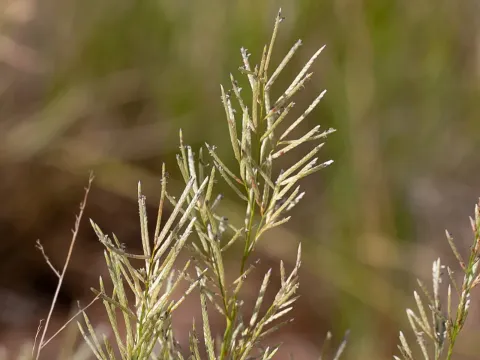
Eragrostis setifolia
Eragrostis setifolia
Eragrostis setifolia, commonly known as a type of lovegrass, is a perennial bunchgrass belonging to the Poaceae family. Native to arid and semi-arid regions of Australia, this species is highly valued for its exceptional ability to withstand extreme environmental stress.
What the section contains
Eragrostis setifolia
The sowing process is ideally timed to coincide with the onset of the rainy season to provide the necessary moisture for seed germination. Seeds should be planted at a shallow depth of 1-2 centimeters in well-prepared, friable soil to ensure successful emergence.
As the seeds are very fine, mechanical broadcasting requires careful calibration of equipment. Rolling the field post-seeding helps to compress the soil slightly, improving seed-to-soil contact and moisture retention during the initial growth phase.
Establishment is slow, often taking several weeks before the grass develops a robust root system. During this period, weed control is essential to prevent competition for light and nutrients, which are critical for the long-term survival of the crop.
Strategic overseeding into existing pastures is a common practice to rejuvenate thinning stands. Using high-quality, certified seeds significantly improves the density and uniformity of the resulting crop stand.
This grass is renowned for its remarkable drought tolerance, making it an excellent choice for reclamation projects and forage production in harsh climates. It thrives in soils ranging from sandy loams to heavy clays, showing a unique ability to cope with waterlogging.
Eragrostis setifolia performs best under full sunlight and is generally sensitive to heavy shading from canopy trees or taller vegetation. It is highly adaptable to various soil pH levels, including slightly saline conditions that would be unsuitable for many other forage species.
Temperature requirements for optimal metabolic activity range between 20°C and 35°C. While the plant can withstand low temperatures, growth ceases during periods of frost, and the grass enters a state of dormancy until conditions become favorable.
Nutrient requirements are relatively modest compared to intensive fodder crops. However, occasional applications of balanced fertilizers during the active growing phase can stimulate tillering and biomass production.
Maintenance of the soil structure through controlled grazing is vital. The plant’s root system helps stabilize the soil surface, preventing erosion in windy or flood-prone areas where other species fail to establish.
The yield potential of Eragrostis setifolia is highly dependent on rainfall distribution and soil fertility levels. In well-managed pastures, it provides a reliable source of green forage even during the dry season when other grasses have already senesced.
As a forage crop, it is particularly useful for grazing ruminants, including cattle and sheep, due to its structural fiber content which aids digestion. Proper rotation allows the plants to recover quickly, ensuring sustainable yields over several years.
Hay yields are moderate but stable. Harvesting before the plant reaches full flowering maturity ensures higher nutritional quality, as the protein concentration tends to decrease as the grass enters the seed-setting phase.
Nitrogen applications post-grazing or after a harvest cut significantly accelerate the regeneration of biomass. This agronomic practice ensures that the pasture remains productive throughout the growing season.
Economic productivity is maximized when the crop is treated as a permanent pasture system. With minimal annual intervention, it remains a reliable source of livestock feed, reducing the need for costly winter supplements.
Fungal diseases, including rust and leaf spot, can impact the vigor of the plant during periods of high humidity and poor air circulation. These diseases reduce the overall photosynthetic leaf area, leading to stunted growth.
Various insect pests, such as grasshoppers and aphids, may pose a threat if present in large populations. Regular monitoring of the field allows for early detection and implementation of integrated pest management strategies.
Overgrazing represents a major threat to the long-term health of the stand. Excessive grazing pressure removes too much of the photosynthetic tissue and exposes the crown to damage, which can lead to thinning and weed infestation.
Weed management should be conducted primarily through physical or ecological means. Herbicidal control is rarely necessary if the pasture is maintained at an appropriate density and allowed adequate rest periods.
Ecological health of the pasture is ensured by balancing stocking rates, which protects the plant’s points of regrowth and prevents the degradation of the soil structure and local biodiversity.
Harvesting for hay should be performed when the grass is in the vegetative stage to late boot stage. At this phase, the ratio of leaf to stem is highest, offering the best possible palatability for livestock.
For pastures, the key is to manage grazing intensity so that plants are not grazed lower than 5-7 centimeters. This height protects the base of the plant and allows for rapid regrowth after the cattle have been moved.
Seed production requires harvesting when the seed heads turn from green to straw-colored. Mechanical harvesters should be adjusted to minimize shattering losses, as the seeds are small and easily dispersed by wind.
Post-harvest management involves drying the forage properly to prevent mold development in baled hay. Proper ventilation in storage areas is essential for maintaining the long-term quality of the forage.
Cleaned seeds should be stored in cool, dry conditions with low humidity to maintain viability for future planting seasons. Testing for germination percentage prior to the next sowing window is recommended.