
Eragrostis tincta
Eragrostis tincta
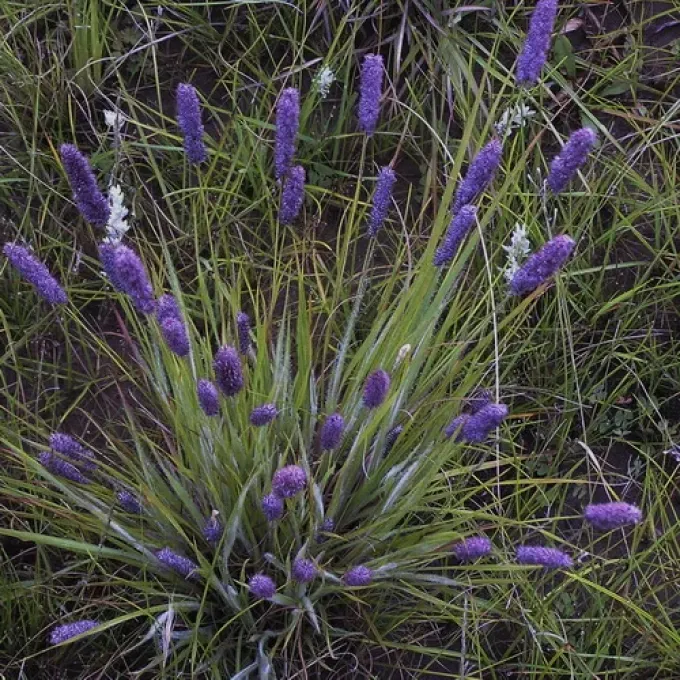
Description
Sowing dates
Sowing should take place in early spring once the risk of severe frost has passed and the soil temperature has risen sufficiently to ensure rapid and uniform seed germination.
Proper field preparation is crucial, involving the creation of a fine tilth that allows for precise seed placement, as the seeds of Eragrostis tincta are relatively small.
The recommended planting depth is shallow, usually around 1 to 2 centimeters, ensuring that seeds are not buried too deeply to emerge effectively.
Seeding rates typically range from 8 to 12 kilograms per hectare, depending on the desired density and whether the crop is being established as a monoculture or as part of a mixture.
Using a drill seeder or broadcast seeder followed by rolling is highly recommended to improve soil-to-seed contact and enhance the overall establishment success.
Growing requirements
Eragrostis tincta is a perennial grass species belonging to the Poaceae family. It is recognized for its adaptation to various environmental conditions and its capacity to thrive in diverse ecological niches.
The species prefers well-drained, fertile soils but exhibits remarkable tolerance to less favorable soil conditions, including low-nutrient substrates, which makes it a versatile choice for marginal lands.
For optimal development, this grass requires sufficient sunlight and does not perform well in heavily shaded environments, which can lead to reduced biomass production.
It demonstrates a high level of resilience to temperature fluctuations, enabling it to survive in regions with significant seasonal climate changes.
Adequate soil moisture is essential during the early stages of growth, although mature plants are known to be moderately drought-tolerant, maintaining growth even during dry spells.
Yield
The yield of Eragrostis tincta depends heavily on management practices, including fertilization and irrigation. With proper care, the grass can provide several harvests per season.
Peak biomass production is generally observed in the second and third years after establishment, as the root system becomes deep and well-developed.
As a forage crop, it is valued for its nutritional profile, providing essential proteins and energy content if harvested at the appropriate developmental stage.
The crop is highly suitable for both hay production and managed grazing, showing excellent recovery rates after harvesting or intensive browsing by livestock.
Proper grazing rotation is necessary to maintain the longevity of the stand and prevent the degradation of the sward caused by overgrazing.
Main diseases and pests
Eragrostis tincta is generally robust, but it can be susceptible to common grass pathogens such as rust and smut, especially in high-humidity climates or poorly ventilated fields.
Insect pests, including various aphids and stem borers, can impact the growth during the vegetative phase, particularly if the plant is stressed by environmental factors.
Integrated pest management strategies are recommended, focusing on maintaining field hygiene and ensuring that the crop is not stressed by improper water management.
Crop rotation and selecting resistant varieties are effective tools for mitigating the impact of soil-borne diseases that can potentially affect the roots.
Regular monitoring of the fields during the peak growth season allows for early intervention, minimizing the need for extensive chemical applications.
Harvesting
Harvesting for hay should ideally occur at the booting or early flowering stage to ensure the highest nutritional quality before the plant directs energy into seed production.
The use of mower-conditioners is advised to speed up the drying process, which helps in preserving the color and vitamin content of the harvested forage.
Seed harvest requires careful timing to avoid excessive shattering; the crop should be harvested when seeds have reached physiological maturity but before they drop naturally.
Post-harvest processing, including cleaning and drying the seeds, is critical to maintaining high viability for subsequent sowing seasons.
Proper storage of hay in dry, well-ventilated barns protects the fodder from spoilage, moisture, and potential microbial contamination, preserving its value throughout the winter.