
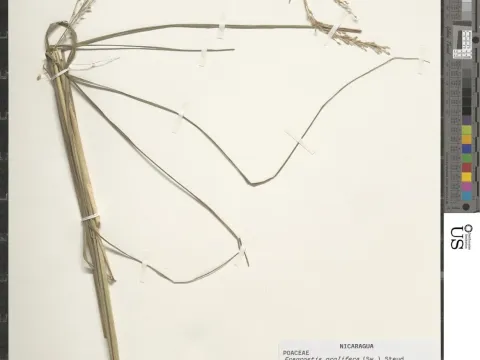
Eragrostis prolifera
Eragrostis prolifera
Eragrostis prolifera is a perennial herbaceous plant belonging to the Poaceae family. Known for its robustness, this species has gained attention in agricultural sectors for its ability to thrive in challenging environmental conditions.
What the section contains
Eragrostis prolifera
Originating from tropical and subtropical regions, the species is naturally adapted to sandy, saline environments, including coastal dunes. Its evolutionary history in these habitats makes it a specialized plant for soil stabilization.
The climate requirements for Eragrostis prolifera are focused on high light intensity and warm temperatures. It is a heliophilic plant that thrives best in full sun, showing poor performance in shaded or cold areas.
Regarding soil preferences, the plant demands excellent drainage and aeration. It thrives in light, sandy soils and is known for its tolerance to soil salinity, making it an ideal candidate for reclaiming coastal or arid lands.
Agrotechnical practices should focus on establishing a stable stand during the initial growth phase. Once established, the plant requires minimal input, as it is naturally competitive and capable of enduring periods of low water availability.
The primary economic use of Eragrostis prolifera is in land management and soil conservation. Its extensive, fibrous root system provides excellent anchorage, effectively preventing erosion in sandy or degraded coastal zones.
In pastoral agriculture, it serves as a supplementary forage resource. While not the highest in nutritive value compared to cereal crops, it provides essential cover and biomass in environments where high-maintenance crops fail to survive.
The biomass yield is significantly influenced by thermal accumulation and sunlight duration. Under optimal growing conditions, the plant displays a rapid growth rate, allowing for multiple harvests or grazing cycles during the season.
The plant's capacity for rapid regeneration makes it a valuable species for intensive grazing management in tropical areas. Its ability to regrow from crown buds ensures longevity of the forage stand.
Environmental potential is also realized through phytoremediation efforts. Eragrostis prolifera contributes to soil health by trapping wind-blown particles and slowly increasing organic matter content in depleted sandy substrates.
Major threats to the crop include fungal pathogens that develop during extended periods of high humidity. Leaf spot diseases are the most common issue, often caused by stagnant air and poor soil drainage.
Pests such as sucking insects and root-boring larvae can compromise the plant's health. Early detection through regular field scouting is essential to mitigate damage to the root system and foliage.
Preventative measures are critical for disease management. Maintaining proper row spacing and ensuring the soil remains loose and aerated will significantly decrease the risk of fungal proliferation.
Weed management is rarely a major concern for established stands of Eragrostis prolifera, as the plant’s dense growth habit creates a natural barrier against invasive competitive weeds.
Biosecurity is an important aspect of managing this species. Ensuring that seeds are free from contaminants and pathogens is the first line of defense in maintaining a healthy and productive agricultural plot.