
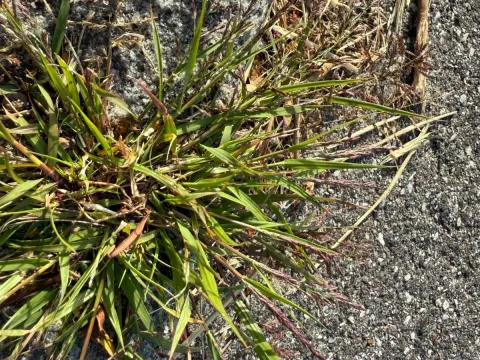
Eragrostis multicaulis
Eragrostis multicaulis
Eragrostis multicaulis, commonly known as Japanese lovegrass or many-stemmed lovegrass, belongs to the Poaceae family. It is a warm-season annual grass that thrives in conditions characterized by high solar radiation and stable, warm soil temperatures during the germination phase.
What the section contains
Eragrostis multicaulis
The optimal sowing window typically opens in late spring when the risk of frost has completely passed. Sowing into warm soil, ideally above 15-18 degrees Celsius, is crucial to ensure rapid seedling emergence and to prevent the crop from being overtaken by competitive weed species.
Given the extremely small size of the seeds, they should be sown at a very shallow depth. A broadcast method followed by light roller compaction is the preferred practice to ensure consistent seed-to-soil contact, which is necessary for maintaining moisture around the seeds.
Seeding rates must be adjusted based on the purity and germination potential of the seed batch. As the plant exhibits significant tillering capacity, it can effectively fill in gaps within the field if initial spacing is handled correctly, resulting in a uniform and dense forage stand.
Post-sowing management includes light irrigation if soil moisture is insufficient. Since the seed reserves are minimal, the young seedlings are highly dependent on early root establishment to survive the critical period between germination and the development of the primary tiller system.
##requirements##This species is highly adaptable, though it achieves peak productivity in well-drained, sandy loam to light loam soils. It shows remarkable tolerance to poor soil quality but is highly sensitive to prolonged waterlogging, which can cause significant root damage and stunt development.
As a heliophilic plant, Eragrostis multicaulis requires full sunlight for maximum biomass production. Any degree of canopy shading from nearby obstacles or high-density planting with other taller crops will significantly reduce the efficiency of its photosynthetic activity.
The nutritional requirements are moderate; however, nitrogen applications during the vegetative growth phase can substantially boost biomass yields. Proper nutrient management should focus on creating a balanced profile that supports the plant's rapid growth cycle without promoting lodging.
The climate must provide an adequate heat sum to complete the plant's life cycle. It is ideally suited for regions with warm summers, where its rapid maturation allows for successful seed set even in shorter growing seasons, provided the temperatures remain consistently above growth thresholds.
In terms of soil structure, the fibrous root system of this grass makes it an excellent choice for improving soil stability in lighter terrains. It acts as a protective cover that prevents wind erosion while contributing to the organic matter content through its root biomass accumulation.
The biomass yield of Japanese lovegrass is heavily influenced by the management intensity and water availability. Under favorable conditions, particularly with supplemental irrigation, the crop can provide high-quality forage with multiple harvest cycles per season.
Primary use is directed towards hay production or rotational grazing. Because of its relatively soft and fine-textured stems, the forage is highly palatable to livestock, making it a valuable resource for maintaining high intake rates in both cattle and sheep production systems.
To capture the highest nutrient concentration, harvests should be timed to the early heading stage. Delaying the harvest beyond this point significantly increases the lignin content, which reduces digestibility and negatively impacts the overall energy value of the feed.
The ability to regrow quickly after mowing is one of the key agronomic advantages of this species. With sufficient moisture, the crop can bounce back rapidly, allowing for 2 to 3 cuts in a single season, thereby maximizing the overall economic output of the allocated land area.
Seed production is another viable economic path for growers. Proper harvest management in seed fields requires monitoring the panicle maturation to prevent excessive seed shattering, which can otherwise result in significant yield losses before the harvest machinery can enter the field.
Fungal diseases, particularly leaf spot and rusts, are the most frequent threats, especially under high humidity conditions. Excessive moisture in the plant canopy promotes the spread of these pathogens, which can severely degrade the quality and yield of the forage.
Common insect pests include wireworms that affect the roots and various grass-feeding flies that attack the young stems. Integrated pest management strategies, including crop rotation and monitoring, are essential to keep these populations below the threshold that causes economic damage.
Proactive disease control relies on ensuring good field hygiene and avoiding the buildup of debris from previous susceptible crops. Maintaining adequate airflow through the canopy by not over-seeding is a simple but effective cultural practice for reducing disease risk.
Biological controls are increasingly utilized in modern agricultural systems. For instance, the use of beneficial insects and specific bio-fungicides can manage pest and pathogen populations without the need for broad-spectrum chemical inputs, ensuring safe feed for livestock.
If chemical intervention is deemed necessary, it should be strictly targeted. Any pesticide application must strictly adhere to safety intervals regarding harvest dates to ensure that no harmful chemical residues remain in the hay or pasture at the time of animal consumption.
Hay harvest management requires precision. Using mower-conditioners is highly recommended to crimp the stems, which breaks the waxy cuticle and significantly accelerates the drying process, ensuring that the hay reaches the required moisture content before the risk of rain exposure.
Once baled, the hay must be stored in a dry, well-ventilated structure. Proper storage prevents heating and mold development, which are the primary causes of feed quality degradation during the winter months, protecting the farmer's investment in the crop.
Seed harvesting typically requires the use of combine harvesters. Careful calibration of the cylinder speed and wind settings is necessary to separate the delicate seeds from the chaff without damaging the embryo, ensuring high viability for the next season's planting requirements.
Seed cleaning processes are vital to remove any weed seeds or organic debris collected during the harvest. High-quality, cleaned seed not only improves the uniformity of the next stand but also prevents the introduction of invasive weed species into the fields.
In regions where the climate allows, a final grazing pass after the last harvest can utilize the regrowth, providing a cost-effective way to clean the fields before the dormant season. This integrated approach optimizes the total biomass usage of the Eragrostis multicaulis stand.