
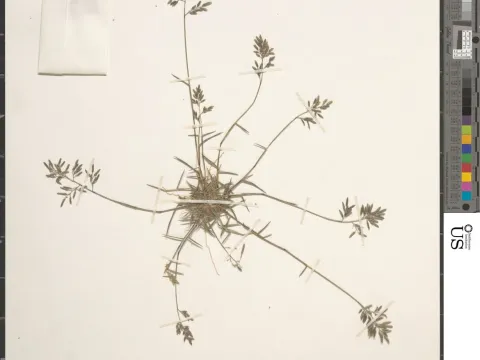
Eragrostis maderaspatana
Eragrostis maderaspatana
Eragrostis maderaspatana is a perennial grass species belonging to the Poaceae family. It is a robust plant native to the tropical and subtropical regions of South Asia, specifically adapted to arid and semi-arid environments where water availability is a limiting factor.
What the section contains
Eragrostis maderaspatana
The plant demonstrates significant drought tolerance, allowing it to thrive in regions with erratic rainfall patterns. It performs best on well-drained, sandy or gravelly soils, demonstrating a high level of resilience in nutrient-poor substrates where other forage plants might fail.
Botanically, it forms dense clumps with narrow, somewhat rigid leaf blades. This morphology is an adaptation to minimize water loss through transpiration, ensuring survival during intense heat waves characteristic of its natural habitat.
The root system of Eragrostis maderaspatana is extensive and deep, which not only provides structural stability to the soil, preventing erosion, but also enables the plant to access moisture from lower soil horizons during dry spells.
In agricultural practice, this species is primarily utilized as a forage crop for livestock grazing. While its nutritional value is moderate compared to improved cultivars, its ability to produce biomass under extreme conditions makes it a valuable asset for pastoral systems in tropical zones.
Eragrostis maderaspatana is naturally resistant to many common cereal and grass diseases. Its physiological structure, characterized by the accumulation of silica, acts as a barrier against most insect pests, making it less susceptible to damage compared to softer grasses.
The primary threat to the longevity and productivity of the crop is overgrazing. Excessive pressure from livestock can lead to the depletion of root reserves, weakening the plant's ability to regenerate after defoliation.
During periods of unusually high humidity, foliar fungal pathogens may appear, resulting in localized spotting. However, under normal field conditions, such outbreaks are infrequent and rarely cause economic damage requiring chemical intervention.
Pest populations such as grasshoppers or stem borers might occasionally impact the stand, but usually do not reach threshold levels that justify control measures. The natural toughness of the leaves deters most generalist herbivores.
Effective management strategies focus on rotational grazing practices. By allowing adequate recovery periods, farmers can ensure the sustainability of the stand, minimizing the incidence of stress-related diseases and maintaining high forage quality.