
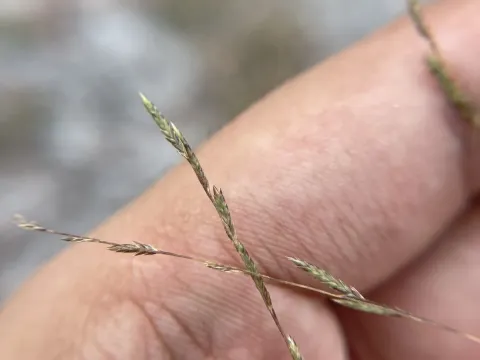
Eragrostis acuta
Eragrostis acuta
Eragrostis acuta belongs to the Poaceae family and is known for its ability to thrive in various environmental conditions as a valuable forage grass.
What the section contains
Eragrostis acuta
Sowing should be performed when soil temperatures are consistently above 15 degrees Celsius to ensure rapid germination and initial seedling development.
The seeds are typically small, requiring shallow placement at a depth of 1 to 2 centimeters followed by light soil compaction to ensure adequate moisture uptake.
Optimal planting density is essential to minimize competition and establish a uniform stand, usually achieved with a seeding rate of 6 to 10 kg per hectare.
Spring sowing is common, although in milder climates, early autumn sowing can also be successful if the plants have sufficient time to establish before winter.
This species is well-adapted to well-drained, light-textured soils such as sandy loams, which prevent waterlogging and facilitate deep root penetration.
It exhibits notable drought tolerance once established, making it a sustainable choice for areas that experience intermittent water shortages during the growing season.
Eragrostis acuta prefers a pH range between 5.5 and 7.5, demonstrating a flexible response to different soil chemical profiles common in agricultural landscapes.
Sunlight is the primary driver for its biomass production, and it should be planted in open areas to avoid the growth inhibition caused by shading.
Balanced fertilization, particularly with moderate amounts of nitrogen, significantly enhances the growth rate and nutritional quality of the forage.
The yield potential of Eragrostis acuta is high, especially when it is managed as a multi-cut forage crop throughout the warm months.
It is valued for its capacity to produce dense vegetative biomass, which serves as high-quality feed for livestock when harvested at the right phenological stage.
Productivity remains relatively consistent over several years, provided the soil fertility is maintained and proper grazing or harvesting cycles are implemented.
- Excellent regrowth after harvesting.
- High palatability for cattle and other ruminants.
- Strong root system that aids in soil stabilization.
When managed as a pasture, the grass withstands moderate grazing pressure, which contributes to its long-term viability in livestock farming systems.
Common fungal diseases, such as rusts, can affect the leaves during periods of high humidity and poor air circulation within the canopy.
Insect pests, including various species of grass-feeding flies and beetles, can cause localized damage, particularly to younger, succulent plants.
Cultural practices, such as maintaining appropriate plant spacing and rotating crops, are the primary methods for mitigating the risk of pest and disease outbreaks.
Early detection is crucial; farmers should regularly inspect the fields to ensure that the infestation levels remain below the economic injury threshold.
Using certified seed and ensuring proper field sanitation before planting significantly reduces the risk of introducing pathogens into the soil.
For high-quality hay production, the grass must be mowed at the onset of the heading stage to optimize the ratio of leaves to stems and nutrient content.
Effective drying processes are necessary to preserve the green color and nutritional integrity of the hay, preventing degradation from moisture or over-exposure.
Seed harvesting requires precision; because the seeds are lightweight and prone to shattering, timely harvest is necessary to minimize yield losses in the field.
Post-harvest cleaning is a mandatory step to remove debris and foreign material, ensuring the seed lot meets the required purity standards for future sowing.
Stored hay should be kept in dry, well-ventilated structures to prevent spoilage and ensure a steady supply of fodder throughout the winter months.