
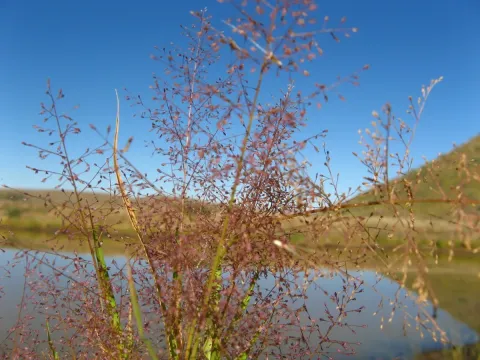
Eragrostis biflora
Eragrostis biflora
Eragrostis biflora is a perennial grass species belonging to the Poaceae family. It is recognized for its ability to thrive in various soil types, making it a viable candidate for pastures and erosion control in arid or semi-arid environments.
What the section contains
Eragrostis biflora
The seeding process begins when soil temperatures consistently range between 15 and 20 degrees Celsius. Because the seeds are minute, shallow sowing at a depth of 0.5 to 1 centimeter is required to ensure proper emergence and avoid burying the seeds too deeply.
Using a precision seeder is recommended to ensure uniform distribution. The seeding rate must be adjusted based on the specific local conditions to prevent overcrowding, which could lead to competition for nutrients and stunted growth in the initial stages.
Rolling the field after sowing is an essential step. It establishes good seed-to-soil contact, which is vital for the germination of such small seeds and ensures that moisture is drawn effectively from the surrounding soil to the seed.
Sowing can be performed either in the early spring or, in regions with milder winters, in late autumn. Autumn sowing often allows for natural stratification, which can lead to more vigorous growth during the subsequent spring season.
Eragrostis biflora is well-adapted to sandy and well-drained soils, showing remarkable tolerance for low-fertility conditions. It acts as an excellent stabilizer for loose, dry soils that are prone to wind erosion.
The plant thrives in regions with moderate to high sun exposure. It is strictly light-demanding and will not perform well in shaded areas, making it unsuitable for intercropping with tall trees or dense shrubbery.
Water requirements for this species are relatively low compared to conventional forage grasses. Once the root system is established, it can withstand prolonged dry spells by entering a semi-dormant state until moisture becomes available again.
The ideal pH range for optimal growth is between 6.0 and 7.5. While it does not require intensive fertilization, a balanced application of phosphorus and potassium during the establishment phase promotes deeper root development and overall plant longevity.
Temperature fluctuations are generally tolerated, but the plant prefers consistent, warm weather. It is sensitive to waterlogging, thus ensuring adequate field drainage is mandatory to prevent root decay and the development of soil-borne diseases.
The forage yield of Eragrostis biflora is highly dependent on effective pasture management. When managed correctly, it provides a consistent supply of green biomass that can be used for grazing livestock during the active growing season.
In rotational grazing systems, it is crucial to allow the plant to recover after being grazed. Allowing a rest period of 3 to 4 weeks ensures that the plant regrows its leaf canopy and replenishes carbohydrates in its roots.
Yields are significantly improved by the presence of nitrogen-fixing companion plants, such as certain legumes, which can provide natural nitrogen supplementation to the soil, thereby increasing the overall nutritional value of the pasture.
While not as productive as high-intensity silage grasses, Eragrostis biflora excels in its role as a persistent, low-input forage crop. Its nutritional content remains stable throughout the vegetative stage, providing reliable sustenance for ruminants.
Under favorable management and climate conditions, a well-established stand can remain productive for several years, providing high-quality grazing long after the initial investment has been amortized.
Rust fungi represent one of the primary pathological threats, particularly during humid seasons. These infections can manifest as orange or reddish pustules on the leaves, significantly reducing the photosynthetic capacity of the plant.
Pests such as grasshoppers and certain species of stem-boring insects can cause localized damage. Integrated pest management strategies, including the maintenance of healthy field borders and selective biological controls, are preferred over broad-spectrum insecticides.
Weed competition during the seedling stage is the most critical threat to successful establishment. Aggressive broadleaf weeds must be controlled early on, as the slow initial growth of Eragrostis biflora makes it vulnerable to being outcompeted.
Soil-borne pathogens like Pythium or Fusarium can be detrimental in waterlogged conditions. Preventing standing water through proper land leveling or sub-surface drainage is the most effective preventative measure against these threats.
Viral infections, often spread by aphid vectors, can lead to stunted growth and leaf curling. Regular scouting and monitoring of insect populations are essential to mitigate the risk of virus spread across the stand.
For hay production, the optimal time to harvest Eragrostis biflora is just before the flowering phase. This timing ensures the highest protein-to-fiber ratio, resulting in a palatable and nutritious forage product for winter use.
After cutting, the grass should be raked into windrows to facilitate drying. Depending on weather conditions, moisture levels should drop to below 18 percent within a few days to prevent mold growth during storage in bales or stacks.
When harvesting for seed, it is necessary to wait until the panicles are fully mature but before they begin to shatter. Direct combining should be performed during the coolest part of the day to reduce mechanical loss and seed shattering.
Post-harvest cleaning of the seeds is required to remove husks, debris, and weed seeds. The cleaned seeds should be stored in cool, dry, and ventilated conditions to maintain high viability for the next planting season.
Stubble management post-harvest is beneficial for the long-term health of the stand. Removing excessive biomass or lightly harrowing the field can encourage new growth and reduce the overwintering capacity of pests and pathogens.