
Eragrostis beyrichii
Eragrostis beyrichii
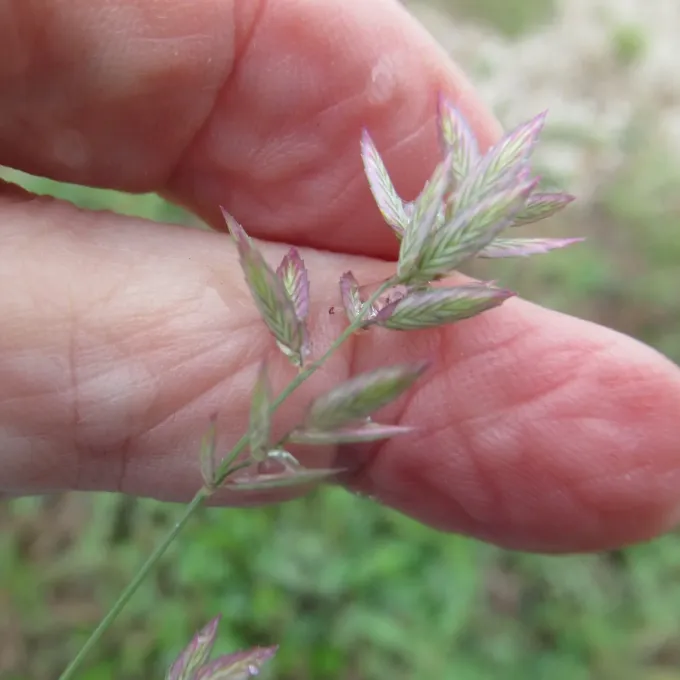
Description
Sowing dates
Eragrostis beyrichii, a member of the Poaceae family, is a perennial grass species that establishes best in well-prepared, loose seedbeds during the warm season.
Due to the extremely small size of the seeds, they should be broadcast or drilled at a very shallow depth, usually not exceeding 1.5 centimeters to ensure optimal germination.
The ideal time for sowing is when the soil temperatures have consistently reached 15–20 degrees Celsius, ensuring rapid development of the root system.
In extensive agricultural systems, drilling is often preferred to ensure even distribution and uniform plant spacing, which enhances the overall competitiveness of the stand.
Light rolling after seeding is recommended to achieve the necessary soil-to-seed contact, which helps prevent desiccation in the topsoil layer during initial germination.
Growing requirements
This grass is highly prized for its exceptional drought tolerance, allowing it to thrive in arid and semi-arid environments where other species struggle to survive.
It prefers well-drained, sandy or gravelly soils, though it can adapt to various soil structures provided they do not hold excessive moisture for prolonged periods.
Full sun exposure is critical for the vigorous growth of Eragrostis beyrichii, as it significantly contributes to the density of the forage stand and its reproductive output.
The species displays a wide range of tolerance regarding soil pH, effectively growing in slightly acidic to moderately alkaline conditions, which makes it highly versatile.
Low fertilizer inputs are usually sufficient, as the plant is well-adapted to nutrient-poor soils, making it an excellent choice for sustainable rangeland management.
Main diseases and pests
Eragrostis beyrichii is naturally resilient against many standard fungal and bacterial pathogens that typically affect high-maintenance forage grasses.
However, during periods of high humidity, the plant may become susceptible to mild leaf spots, though these rarely affect the overall productivity of the crop.
Common insect threats include grass-feeding aphids and leafhoppers, which can occasionally reach threshold levels in very dense, unmanaged stands.
Good field sanitation and maintaining a proper grazing frequency are the most effective strategies for keeping the grass stand healthy and resistant to pest pressure.
While minimal chemical intervention is typically required, integrated pest management practices should be employed if infestation levels threaten plant development.
Harvesting
The primary use of Eragrostis beyrichii is as a perennial forage crop, providing high-quality grazing resources for various types of livestock throughout the growing season.
Harvesting for hay should be timed carefully, ideally just as the plant begins to produce inflorescences, to ensure the best balance of biomass and nutritional density.
For seed production, harvesting must be executed when the seeds begin to reach maturity, using adjusted machinery to minimize shattering and loss of grain.
Proper grazing management, including rotation, prevents overgrazing and allows the plant to maintain a healthy root mass for regeneration in subsequent years.
After-harvest residue management should focus on preserving the crown of the plants to ensure a quick and healthy regrowth during the following season.