
Eragrostis bicolor
Eragrostis bicolor
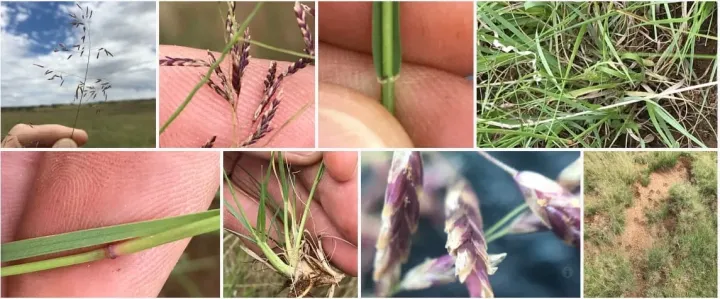
Description
Sowing dates
Eragrostis bicolor is a warm-season grass that requires sufficiently warm soil conditions for successful germination and early development.
Planting should be scheduled for late spring or early summer when soil temperatures are consistently above 15 degrees Celsius.
Due to the extremely small size of the seeds, they should be sown shallowly, ideally not deeper than 1-2 centimeters in well-prepared soil.
Adequate soil moisture is critical during the first few weeks after sowing to ensure the survival of young, delicate seedlings.
Seedbed preparation is vital; fine-textured soil and rolling after sowing help to improve seed-to-soil contact and speed up emergence.
Growing requirements
As a member of the Poaceae family, Eragrostis bicolor is well-adapted to hot climates and possesses significant drought tolerance.
The crop thrives in full sun and requires open areas to avoid the negative effects of shading on its growth and development.
It performs best in well-drained soils, ranging from sandy loams to light sandy soils, where it can avoid waterlogging issues.
While tolerant of low-fertility soils, the application of nitrogen fertilizers during the growing season significantly boosts biomass yield.
The plant is sensitive to frost and cold temperatures, which makes its distribution limited primarily to warmer geographical regions.
Yield
The annual yield potential of Eragrostis bicolor is determined by the number of cuts performed throughout the growing season.
With favorable weather conditions and proper irrigation, multiple harvests can be achieved, ensuring a consistent supply of forage.
The forage quality remains highest when the crop is harvested before full maturity to maximize protein and nutrient content for livestock.
Productivity fluctuates based on management practices, including timing of fertilization and adherence to optimal mowing heights.
Seed production requires careful monitoring of harvest time to prevent yield losses due to the natural shedding of mature seeds.
Main diseases and pests
Fungal diseases related to excessive humidity and poor air circulation are the primary biological threats to this grass species.
Various cereal insects and larvae can damage the foliage during the vegetative stage, potentially reducing overall crop vigor.
Weed competition is a significant concern during the establishment phase, as the grass grows slowly and is easily overwhelmed by aggressive weeds.
Integrated pest management, including crop rotation and proper site selection, is recommended to minimize the reliance on chemical controls.
Monitoring the fields for early signs of disease and pest infestation allows for timely intervention and preservation of the forage quality.
Harvesting
Harvesting for hay is ideally conducted at the onset of the heading stage to balance total biomass quantity with nutritional quality.
Quick drying of the cut grass is essential to prevent mold growth and maintain the nutritional integrity of the stored fodder.
Maintaining a stubble height of 7-10 centimeters during mowing encourages rapid regrowth and protects the plant's carbohydrate reserves.
For silage production, chopping the material finely and ensuring compact ensiling is necessary to achieve successful anaerobic fermentation.
Proper storage of dried hay, protected from humidity and rainfall, is crucial to prevent spoilage and maintain high palatability for livestock.