
Lehmann lovegrass
Eragrostis lehmanniana Nees
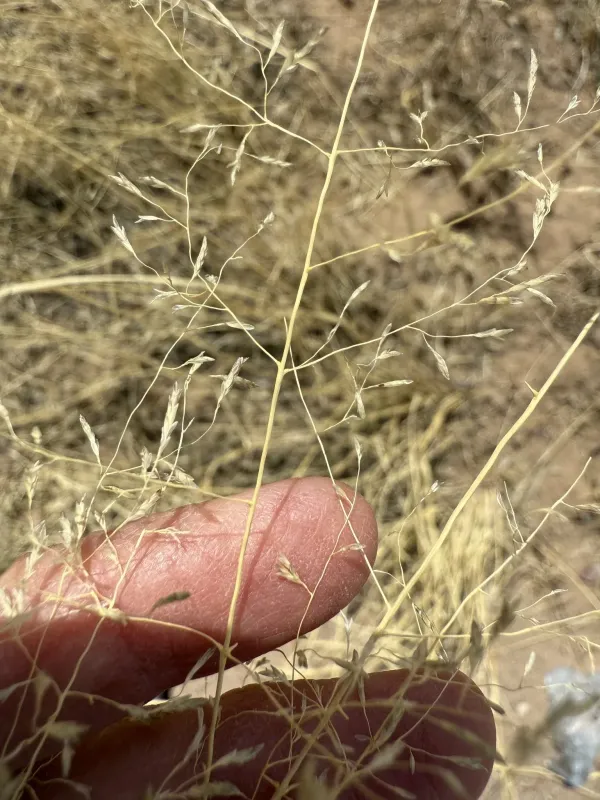
Description
Sowing dates
Lehmann lovegrass (Eragrostis lehmanniana) is a warm-season perennial bunchgrass that is highly valued for revegetation in arid and semi-arid environments.
Sowing should be timed just before the onset of the summer rainy season to ensure the seeds have moisture for germination and seedling establishment.
Due to the extremely small size of the seeds, they should be broadcast on the soil surface and lightly firmed into the seedbed without deep burial.
Seedbed preparation should aim for a firm surface, as fluffier soil may bury the seeds too deeply and prevent emergence.
Weed management during the first few weeks after emergence is vital, as the seedlings are slow to develop and can be easily outcompeted by invasive weeds.
Growing requirements
Native to Southern Africa, this species is exceptionally well-adapted to high-temperature regions and intermittent drought conditions.
It performs best on sandy to gravelly soils but demonstrates remarkable versatility across various soil textures, provided they offer good drainage.
The plant is highly tolerant of full sun exposure, which is necessary for maximizing biomass production and maintaining its health.
While it can survive on relatively infertile soils, the application of minimal nitrogen fertilizer can significantly improve vegetative yield in production areas.
The grass is moderately cold-hardy, although extreme freezing temperatures may kill the top growth, usually resulting in rapid spring regrowth.
Yield
The primary use of Lehmann lovegrass is for pasture and rangeland forage, as it provides reliable feed during hot, dry periods when other grasses go dormant.
It is capable of rapid regrowth following grazing or mowing, provided that the soil retains a minimum level of moisture throughout the growing season.
Nutritional value is highest during the vegetative stage; as the plant matures and produces seed heads, the protein content decreases and fiber content increases.
Beyond forage, the plant is extensively used for soil stabilization and erosion control because of its dense, fibrous root system.
Yields are highly dependent on annual rainfall patterns, yet the grass maintains a stable presence even in years with below-average precipitation.
Main diseases and pests
Lehmann lovegrass is largely resistant to most common crop pests, making it a low-maintenance choice for large-scale land management.
The most significant threat to plant health is waterlogging, which often leads to root decay and susceptibility to opportunistic fungal pathogens.
In some regions, the plant is considered invasive because it aggressively competes with native vegetation, requiring careful site selection.
Insect pests such as grasshoppers may occasionally cause minor leaf damage, but they rarely reach levels requiring chemical intervention.
The species is generally free from major viral diseases, allowing it to thrive without the need for intensive plant protection products.
Harvesting
Hay harvest should occur at the early heading stage to optimize the balance between the quantity of forage and its nutritional quality.
Care should be taken during drying to maintain the leaf-to-stem ratio, ensuring the highest possible feed value for livestock.
Periodic grazing or controlled mowing is recommended to prevent the accumulation of old, coarse stalks and to stimulate new growth.
If harvesting for seed, wait until the panicles show a straw-colored maturity and the seeds begin to shed naturally.
Aftermath grazing or standing residue provides protective ground cover, which helps reduce soil evaporation and mitigates erosion risk.