
Black lovegrass
Eragrostis nigra Nees ex Steud.
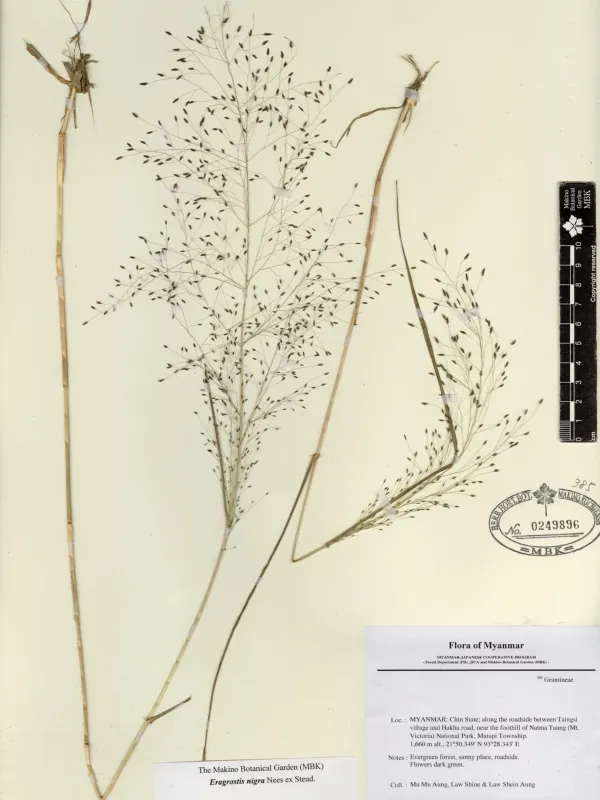
Description
Sowing dates
The optimal time for sowing black lovegrass is during the spring, as soil temperatures rise. Proper timing allows the seeds to germinate before the heat of mid-summer, ensuring the seedlings have enough time to establish deep roots.
Seeding depth is critical due to the small size of the seeds; they should be sown shallowly, ideally at 1 to 2 centimeters. Using a specialized drill or broadcasting followed by light harrowing is common practice to achieve good soil contact without burying the seeds too deeply.
Recommended seeding rates depend on the specific site conditions and intended use, typically ranging from 8 to 12 kilograms per hectare. Establishing a uniform stand is vital to maximize future biomass production and minimize space for invasive weeds.
Weed control in the early growth stages is essential, as the seedlings of Eragrostis nigra can be slow to establish. Maintaining a clean seedbed and using appropriate management strategies will help the young grass outcompete surrounding weeds.
Rolling the soil after sowing is a recommended step to ensure firm contact between the seed and the soil surface. This process helps retain moisture and promotes more uniform germination across the entire field.
Growing requirements
Black lovegrass (Eragrostis nigra Nees ex Steud.) is a perennial grass species within the Poaceae family. Native to parts of Asia, this plant has adapted to diverse environments, ranging from mountainous regions to open grasslands, demonstrating significant ecological versatility.
This grass thrives in sunny locations with moderate moisture, showing a good degree of tolerance to dry spells once the root system is well-established. Its adaptability to various climatic conditions makes it a valuable species for ecological restoration and forage systems.
Regarding soil requirements, Eragrostis nigra prefers well-drained, loose soils. It is particularly successful on loamy or sandy loam textures where aeration is sufficient. It avoids waterlogged soils, which can cause root rot and impede the development of the dense turf it is known for.
The botanical structure of the plant features clump-forming habits with slender leaves and delicate, dark-colored panicles. These distinctive blackish inflorescences emerge during the peak growing season, giving the plant its common name and visual character.
In agricultural practice, it is utilized as a forage grass. It is highly valued for its palatable green biomass, which provides a steady source of nutrients for livestock during the active growing season in pasture and haying operations.
Main diseases and pests
Black lovegrass is generally robust and resistant to most common grass pathogens. However, in conditions with high humidity and poor air circulation, some foliage diseases like rust or leaf spots may occur, particularly if the stand becomes too dense.
Pest threats include typical cereal and grass pests such as aphids and various grass-feeding larvae. These insects can damage the leaves or the growing points, which may lead to stunted growth and reduced overall yield of the forage.
Management strategies should focus on preventive measures, such as proper harvest timing and adequate fertilization. Avoiding excessive nitrogen application, which can cause lush growth prone to pests, is a key component of sustainable grass management.
Integrated pest management involves regular scouting of the fields to identify potential outbreaks early. If necessary, targeted biological or chemical control methods can be employed to protect the crop from significant economic damage.
Maintaining plant health through balanced mineral nutrition, especially with potassium and phosphorus, reinforces the cell walls and improves natural defense mechanisms. A healthy, vigorous stand is the best deterrent against both diseases and insect infestations.