
Sand lovegrass
Eragrostis trichodes (Nutt.) A. W. Wood
Description
Sowing dates
Sand lovegrass (Eragrostis trichodes) is a perennial bunchgrass belonging to the Poaceae family. The optimal time for sowing is in early spring once soil temperatures have consistently risen, allowing for active germination and establishment.
The seeds of this species are quite small, necessitating shallow planting. A depth of 1 to 2 centimeters is ideal, ensuring the seeds are covered while still having sufficient energy to reach the surface for photosynthesis.
Proper seedbed preparation is vital for success. The soil should be finely tilled and firm to ensure good seed-to-soil contact, which is essential for capturing available soil moisture during the critical germination phase.
Seeding rates typically range from 4 to 6 kilograms per hectare depending on site conditions and the intended use of the stand. Using a drill seeder can provide more uniform spacing and deeper precision compared to broadcast sowing.
Immediately after seeding, firming the soil with a roller is highly recommended. This practice helps prevent the seeds from drying out and encourages rapid emergence, which is key to outcompeting early-season weeds.
Growing requirements
Sand lovegrass is highly adapted to sandy and sandy-loam soils, where it thrives compared to other forage grasses. It is particularly valued for its ability to grow in nutrient-poor soils where soil fertility may be a limiting factor.
The species is renowned for its exceptional drought tolerance. Its deep and extensive root system allows it to access water deep within the soil profile, making it a reliable choice for semi-arid environments.
Full sun exposure is preferred for maximum growth and biomass production. While it can tolerate partial light, consistent shading will significantly decrease its productivity and overall density in a pasture setting.
The plant is highly hardy and can withstand significant temperature fluctuations throughout the growing season. It performs well in temperate climates, establishing well before the onset of winter dormancy.
Fertilizer requirements are modest, as the species is adapted to lower fertility soils. Excess nitrogen should be avoided as it can lead to lodging and a decrease in the quality of the forage due to overly rank vegetative growth.
Yield
The primary use of Sand lovegrass is as a high-quality forage source for livestock, particularly during the grazing season. When managed correctly, it provides a consistent supply of palatable vegetation.
Beyond its value as forage, it is widely utilized in soil conservation and reclamation projects. Its root structure is excellent for stabilizing dunes and sandy soil, preventing wind and water erosion effectively.
The biomass yield is reliable across multiple seasons provided the stand is not overgrazed. It can support grazing rotations that help maintain the health and vigor of the pasture throughout the warmer months.
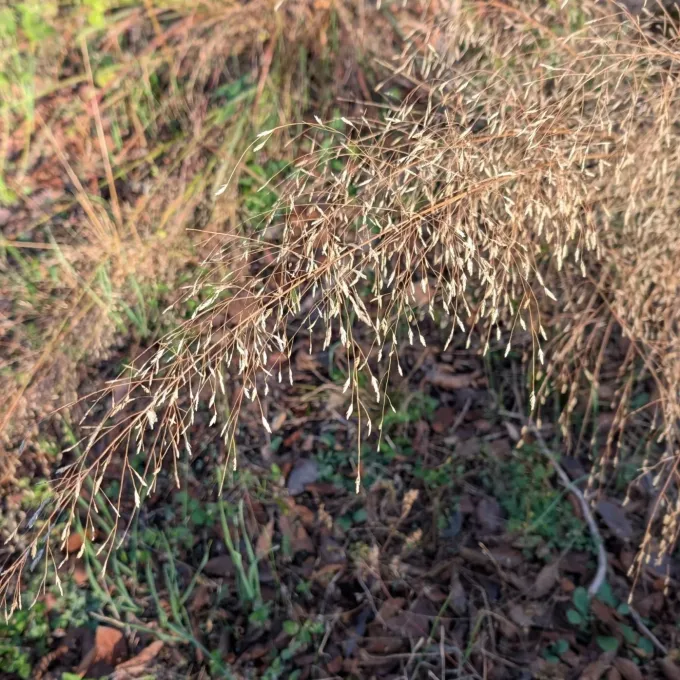
Sand lovegrass also serves as an ornamental plant in naturalistic landscaping. Its delicate, hair-like panicles add visual texture to native grass plantings and meadows, making it a favorite for ecological design.
Seed production is an important secondary use for growers, as demand for native grass seed is high. Harvesting for seed requires careful timing and specialized equipment to handle the fine, light grains.
Main diseases and pests
Sand lovegrass is relatively resistant to major plant diseases compared to more domesticated cereal crops. Most issues arise only under conditions of excessive moisture or poor drainage which encourage fungal growth.
Insect pests such as aphids or leafhoppers can occasionally inhabit the stand. While generally not lethal, heavy infestations may affect plant vigor and should be monitored during the early development of the leaves.
Weed management during the establishment year is the most critical hurdle. Since the seedlings develop slowly, early competition from fast-growing weeds can compromise the entire stand density.
Overgrazing is a significant risk that must be managed by rotating livestock between pastures. Allowing sufficient rest periods between grazing cycles ensures the root reserves are replenished and the stand persists.
Regular monitoring of the field helps in identifying signs of stress or pests early. Maintaining a balanced fertility program and proper grazing intensity are the best defensive strategies against biological threats.
Harvesting
When harvesting for hay, the best quality is achieved if the grass is cut before the seeds have fully matured. Harvesting at the late vegetative or early heading stage ensures high protein and mineral content.
The forage dries rapidly, which is a major advantage for hay production. Proper curing in the field allows for efficient baling and storage without the risk of spoilage if moisture levels are correctly managed.
Grazing management should focus on maintaining a height that allows the plant to continue photosynthesis. Removing cattle once the grass reaches a certain stubble height is key to long-term survival.
Seed harvesting requires patience and specific techniques because the seeds are small and prone to shattering. The panicles should be harvested as soon as they reach maturity to minimize harvest losses.
After harvest, seed lots must be cleaned and dried to a safe moisture level for storage. Keeping seeds in a cool, dry place ensures high viability and germination rates for future planting seasons.