
Eragrostis pilosa
Eragrostis pilosa (L.) P. Beauv.
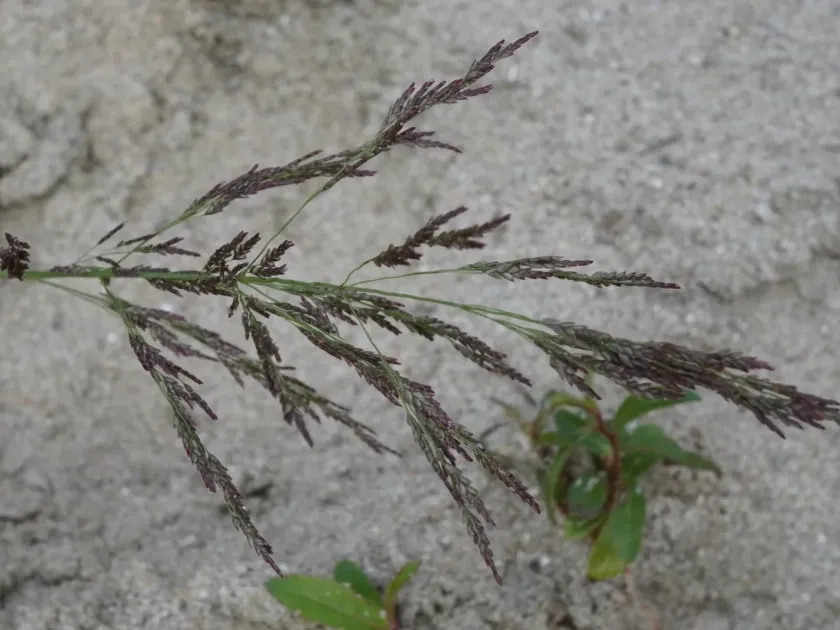
Description
Sowing dates
Eragrostis pilosa, commonly known as hairy lovegrass, is a summer annual grass within the Poaceae family. It is often found in disturbed areas and is recognized for its ability to thrive under harsh conditions.
Sowing should take place when soil temperatures consistently reach 18-22 degrees Celsius, as the seeds require sufficient warmth for rapid and uniform germination.
Given the minute size of the seeds, they must be sown shallowly, typically at a depth of 0.5 to 1 centimeter. Proper soil preparation is essential to ensure good seed-to-soil contact.
Seeding rates depend on the intended use. For forage production, a density of 10-12 kilograms per hectare is generally sufficient to create a robust and competitive stand.
Rolling the soil after sowing is a recommended agronomic practice, especially in drier environments, to improve moisture retention around the seeds and facilitate early root development.
Growing requirements
This species is exceptionally well-adapted to high-temperature environments and exhibits remarkable drought tolerance, making it suitable for areas prone to water scarcity.
It prefers full sun exposure and is highly intolerant of shade. In shaded conditions, the plant's growth rate significantly drops, leading to thin and unproductive stands.
Eragrostis pilosa shows a preference for light-textured soils, including sandy and loamy soils, where it can develop an extensive and deep root system to access available nutrients.
While the plant can survive on nutrient-poor soils, its biomass production increases significantly with nitrogen fertilization during the vegetative growth phase.
Drainage is a critical requirement. Although it can handle short-term drought, it does not perform well in waterlogged, compacted, or heavy clay soils where root respiration is inhibited.
Yield
Forage yield is largely determined by the harvest timing. Harvesting before the plant reaches full anthesis ensures the highest nutritional value in terms of protein and sugar content.
In optimal conditions with moderate irrigation or rainfall, the species can produce 15-25 tons of fresh green matter per hectare over a single growing season.
The regrowth capacity is excellent, allowing for multiple harvests or continuous grazing if managed correctly and not overgrazed during its peak growth period.
Seed production yields are variable, ranging between 400 and 700 kilograms per hectare, depending on the uniformity of the ripening process and harvest technology employed.
The nutritional profile of the grass is best suited for ruminants, though it should be monitored for secondary compounds that might affect palatability if harvested at a late stage.
Main diseases and pests
Generally, Eragrostis pilosa is resistant to many common fungal pathogens found in traditional cereal crops. However, rusts can occasionally emerge in highly humid regions.
Aphids are the most common pests observed on this grass. They cluster on the inflorescences and tender leaves, which can stunt the growth of the plant if left uncontrolled.
Soil-borne pests like wireworms may cause significant damage to young seedlings. Effective management often involves crop rotation to break the pest's life cycle.
Integrated pest management strategies, emphasizing the use of beneficial insects and proper fertilization to improve plant vigor, are preferred over heavy chemical usage.
Ensuring that seed stocks are clean and free from invasive weed contaminants is the best preventative measure against unwanted competition and the spread of pathogens.
Harvesting
For high-quality forage, harvesting should coincide with the early heading stage. This minimizes fiber content and maximizes digestibility for livestock consumption.
Curing the hay requires efficient drying processes, as the thin stems dry out quickly but must be baled at the right moisture content to prevent storage-related issues.
For seed harvesting, a two-stage method is often used, involving cutting the plants and allowing them to dry in windrows for several days before final threshing.
Storage of the harvested seed must be in cool, dry conditions with adequate ventilation to maintain viability and prevent the onset of fungal growth or heating.
The stubble remaining after the final harvest provides a protective ground cover that helps maintain soil health and reduces erosion risk during the off-season.