
Stinkgrass
Eragrostis cilianensis (All.) Vignolo ex Janch.
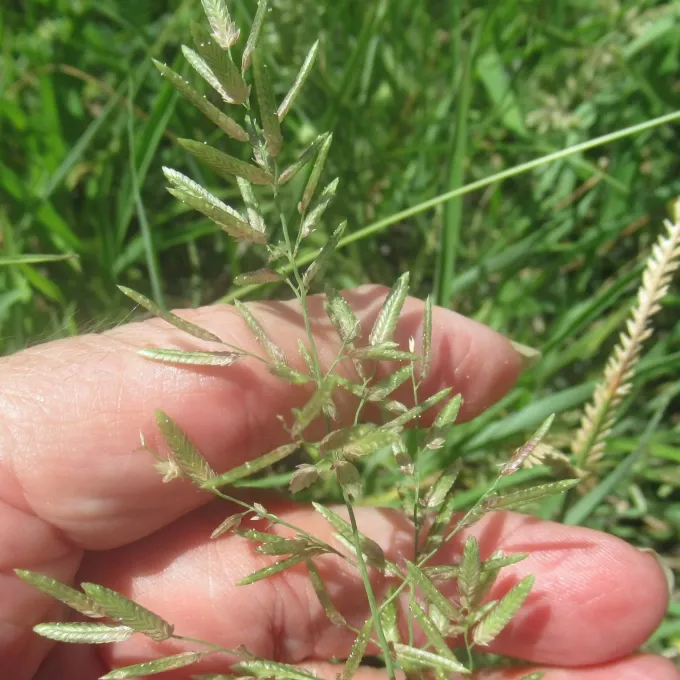
Description
Sowing dates
Stinkgrass is a thermophilic plant that requires high soil temperatures for successful germination and early development in the field.
The ideal sowing period occurs during late spring or early summer when the soil has fully warmed up to at least 18 degrees Celsius.
Because the seeds are exceptionally small, they must be sown very shallowly, usually no deeper than 0.5 to 1 centimeter below the surface.
Packing the soil after sowing is essential to ensure that the tiny seeds maintain consistent contact with the soil moisture needed for emergence.
Due to its high seed production, Stinkgrass is often self-seeding, leading to a persistent presence in areas where it has been previously grown.
Growing requirements
Belonging to the Poaceae family, Stinkgrass thrives in well-drained, sandy, or loamy soils with neutral to slightly alkaline pH levels.
It is widely recognized for its extreme drought tolerance, allowing it to remain productive even in areas with limited or sporadic precipitation.
Full sun is a critical requirement for this species, as it competes poorly in shaded environments and tends to die out if crowded by taller plants.
The plant is resilient to varying nutrient levels, although higher nitrogen availability can significantly boost its forage biomass production.
It exhibits unique physiological adaptations that allow it to maintain photosynthesis under high-heat conditions that would stress other grass species.
Main diseases and pests
Stinkgrass is naturally resistant to many common agricultural diseases, making it a relatively low-maintenance crop in terms of fungicide use.
Under conditions of high humidity, it can occasionally be susceptible to fungal infections such as rusts, which might affect leaf quality.
Insect pests, including aphids and thrips, can cause damage during the active growing season by feeding on the sap of the tender shoots.
Root damage caused by soil-dwelling larvae is most likely to affect young seedlings, potentially reducing stand density in early development.
Effective pest management relies on balanced irrigation practices and monitoring field conditions to prevent an environment favorable to common pests.