
Deer grass
Muhlenbergia rigens
Description
Growing requirements
Deer grass (Muhlenbergia rigens) is a perennial bunchgrass belonging to the Poaceae family. It is native to the southwestern United States and northern Mexico, where it thrives in open slopes, canyons, and forest openings within semi-arid environments.
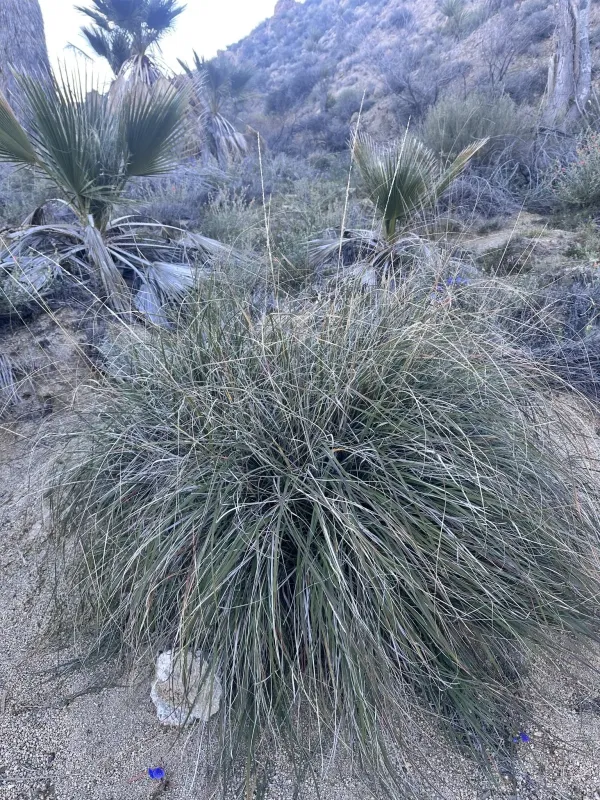
The plant is characterized by a dense, tufted habit with fine-textured, grey-green foliage. During the late summer and autumn, it produces striking, narrow, upright flower spikes that can reach heights of up to one meter, providing significant winter interest.
As a highly drought-tolerant species, deer grass is an excellent candidate for xeriscaping and sustainable landscape design. It prefers full sun exposure and requires soils that offer excellent drainage to mimic its natural, arid habitat.
The root system is extensive and deep, which makes it highly effective for erosion control on slopes. The plant is notably hardy, though it requires well-draining soil, especially during winter months, to prevent crown rot associated with excess moisture.
In terms of initial cultivation, deer grass establishes itself somewhat slowly. Therefore, ensuring a weed-free zone around the planting site during the first growing season is crucial to allow the root system to develop without resource competition.
Main diseases and pests
Deer grass is exceptionally resilient and has very few natural enemies. Most issues regarding plant health are typically associated with site selection and irrigation management rather than pests or diseases.
The most significant threat is the development of root rot, which typically occurs in soils with poor drainage. Once roots begin to decay due to waterlogging, the plant's vigor declines rapidly, often resulting in localized dieback within the clump.
Insect pests are generally not a concern for Muhlenbergia rigens. While occasional aphid activity might be seen on tender new growth, it rarely reaches economic thresholds that would require chemical intervention.
Cultural control, such as avoiding over-watering and ensuring proper spacing for air circulation, is the best strategy for disease prevention. Chemical fungicides are rarely needed, aligning with the plant’s profile as a low-input, eco-friendly landscape element.
Monitoring the plant for physical stress, such as yellowing or thinning of the clump, is recommended. These signs usually indicate a need for improved drainage or a review of irrigation cycles rather than a need for disease treatment.
Harvesting
The primary use of deer grass is in ornamental horticulture and habitat restoration. It is highly valued for its aesthetic appeal, architectural form, and minimal maintenance requirements once the plants are fully established.
In landscape architecture, it is frequently used in mass plantings to provide year-round textural interest. Its ability to retain its form even after flowering makes it a preferred choice for dry garden design.
Historically, the long, durable leaves of Muhlenbergia rigens were essential materials for Native American basketry. This historical use showcases the structural integrity and toughness of the plant's fibers.
Maintenance involves routine pruning of the dead foliage. This is best accomplished in late winter or early spring by cutting the plant back to several inches above the ground, which stimulates fresh growth for the upcoming season.
Propagation can be achieved through seeds or by division of established clumps. Spring is the recommended time for division, provided that the newly moved sections receive consistent moisture until they are fully settled into their new location.