
Dendrocalamus hamiltonii
Dendrocalamus hamiltonii
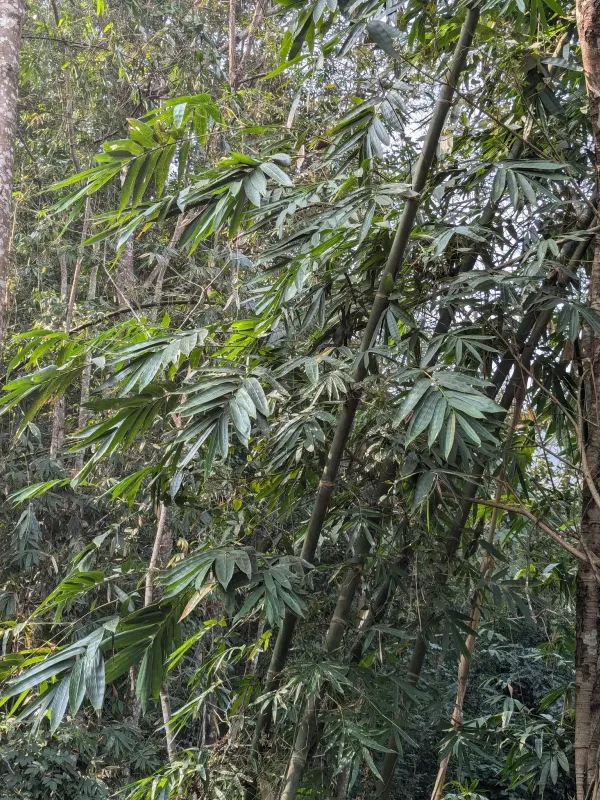
Description
Growing requirements
Dendrocalamus hamiltonii is a member of the Poaceae family, recognized as a large, clumping sympodial bamboo. In its native habitat, it can reach heights of up to 20 meters with culm diameters ranging from 10 to 15 centimeters.
The species originates from the Himalayan foothills, spreading across Nepal, Bhutan, and Northeast India. It thrives in tropical and subtropical zones characterized by significant annual rainfall and humid atmospheric conditions.
This bamboo species requires deep, fertile, well-drained loamy soils to reach its full productive potential. A soil pH range of 5.5 to 7.5 is considered ideal for maintaining optimal nutrient uptake and root health.
Agronomic management involves proper spacing during plantation establishment, typically requiring a 5–7 meter gap between individual clumps. This allows sufficient space for the rapid development of rhizomes and new culms.
While the plant is sun-loving, young specimens benefit from shade during their establishment phase. Consistent moisture is vital during the growing season, though the plant must be protected from waterlogged soil conditions.
Yield
The economic utility of Dendrocalamus hamiltonii is vast, encompassing traditional building, furniture manufacturing, and the production of diverse agricultural implements and construction materials.
The young, tender shoots of this species are harvested as a popular culinary vegetable. Once boiled to remove natural bitterness, they provide a nutritious source of fiber and essential minerals.
The foliage and processing by-products are highly valued as fodder for livestock. Its integration into agroforestry systems provides a reliable source of green mass for cattle during lean seasons.
In the industrial sector, the bamboo's long fibers are excellent for pulp and paper production. It is increasingly viewed as a sustainable alternative to wood for high-quality packaging and paper goods.
Environmentally, the plant serves as a critical agent in soil erosion control. Its extensive root system stabilizes steep mountain slopes, making it a key species for reforestation and watershed management.
Main diseases and pests
Common pathological threats include fungal leaf spot diseases and rust, which often propagate when humidity levels are excessive and airflow within the clump is obstructed by dense vegetation.
Insects, particularly bamboo mites and stem-boring beetles, are the primary pests. These organisms can severely impact the growth of new shoots and degrade the structural integrity of mature culms.
Strategic management includes periodic pruning of old, diseased, or insect-damaged culms. This practice ensures better air circulation and reduces the micro-climate favorable for disease outbreaks.
Root health monitoring is essential to prevent decay caused by soil pathogens. Proper site selection and drainage management are the most effective preventive measures against root-related problems.
Integrated pest management (IPM) is recommended, emphasizing the use of biological controls and maintaining plantation hygiene to minimize reliance on synthetic chemical interventions.