
Desert oat grass
Helictotrichon desertorum
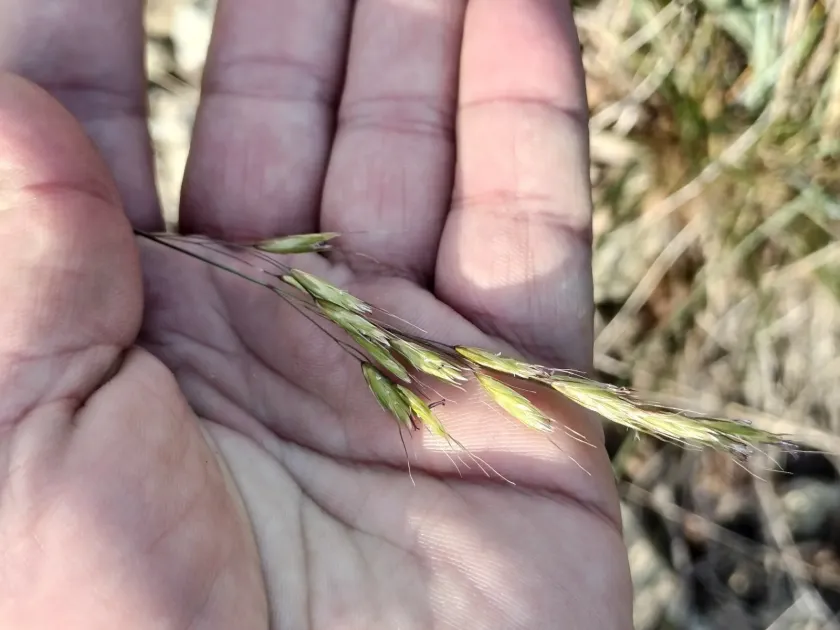
Description
Growing requirements
Desert oat grass (Helictotrichon desertorum) is a perennial member of the Poaceae family. It is a highly valued native grass species found primarily in Eurasian steppe and forest-steppe zones.
The plant is uniquely adapted to harsh, semi-arid environments. It thrives in well-drained soils, ranging from fertile chernozems to lighter chestnut soils, showing remarkable tolerance to low moisture levels.
Botanically, it forms dense tussocks that are highly resilient. Its narrow, hardy leaves are designed to reduce transpiration, ensuring survival during hot, dry summer months.
Climate requirements include a preference for well-lit, open areas with moderate temperatures. It is notably winter-hardy, capable of surviving severe cold without significant damage to the root system.
Proper soil management for this species focuses on avoiding waterlogging. It performs exceptionally well in regions where other forage grasses might struggle due to low precipitation or poor soil quality.
Yield
Desert oat grass is predominantly used for grazing and hay production. It is highly sought after for its ability to provide early spring growth, making it a critical resource for livestock.
The yield of green biomass depends on stand density and management practices. It is a palatable forage source during early vegetative stages, providing essential nutrients for ruminants.
As the plant matures into the flowering stage, the nutritional content shifts, requiring strategic timing for hay harvesting to maximize quality before the stems become too fibrous.
The grass is an excellent choice for erosion control. Its deep, fibrous root network acts as a natural stabilizer for soils on sloped terrain, preventing topsoil runoff.
Integrating desert oat grass into pastures significantly enhances the sustainability of the forage system, offering a long-lived, low-maintenance component for diverse animal diets.
Main diseases and pests
One of the primary benefits of this species is its robust natural resistance to many common agricultural diseases that plague more intensive cereal crops.
However, environmental stressors such as prolonged humidity can occasionally lead to rust infections, which should be monitored if the field is intended for high-quality hay production.
Pest pressure is generally minimal, though certain insects may target the reproductive parts, potentially impacting seed yield if the grass is grown for propagation.
Good grassland management, including periodic mowing and avoidance of overgrazing, acts as an effective preventive measure against both weeds and common plant pathogens.
Sustainable farming practices favor this grass because it requires very little chemical intervention, fitting perfectly into organic or extensive agricultural management plans.