
Dendrocalamus giganteus
Dendrocalamus giganteus
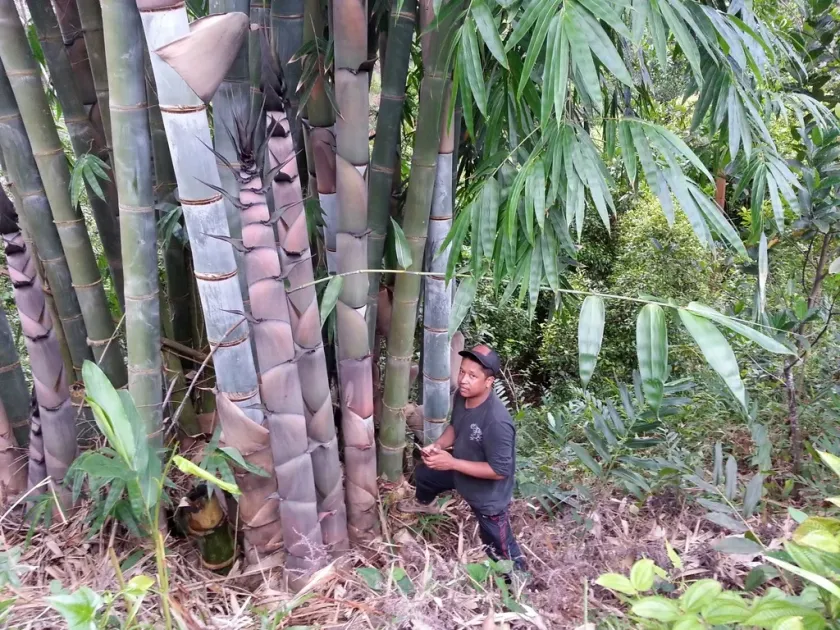
Description
Sowing dates
Dendrocalamus giganteus is typically propagated through vegetative means, such as culm cuttings or rhizome division, as the plant rarely produces seeds. The ideal time for planting is the beginning of the rainy season to ensure sufficient moisture for establishment.
Preparation involves digging large, nutrient-rich pits. Given the massive size this plant achieves, spacing between individual plants must be generous, usually requiring at least 5 to 8 meters to prevent overcrowding.
Young plants require consistent watering during their first two years. Growth is incredibly rapid; in optimal tropical conditions, new shoots can emerge and grow by several dozen centimeters within a single day.
Acclimatization of nursery-grown stock is a critical phase. Keeping the young shoots in high humidity environments helps ensure higher survival rates before transplanting them to the open field.
Field management requires monitoring for proper rhizome development. Keeping the soil loose and free of competitive weeds around the young bamboo base is essential during the initial growth stages.
Growing requirements
As a member of the Poaceae family, Dendrocalamus giganteus is a quintessential tropical species. It thrives in temperatures ranging from +20°C to +35°C, requiring constant warmth for its vigorous growth.
The plant is highly sensitive to cold and frost; it cannot survive in climates where temperatures drop significantly. Consequently, its commercial cultivation is confined to the tropical and equatorial zones.
Soil requirements include deep, fertile, and well-drained substrates. While the plant loves high air humidity, it is intolerant of waterlogged soil, which can lead to root decay and overall plant decline.
The ideal soil pH is between 5.5 and 7.0. Deviations in acidity can impede nutrient uptake, leading to thinner culms and reduced overall structural integrity of the bamboo poles.
Exposure should be in partial to full sunlight, provided the air humidity remains high. Protection from drying, strong winds is necessary, as gusts can damage the long, heavy culms of the giant grass.
Yield
Dendrocalamus giganteus is among the highest-yielding biomass crops in the world. Its ability to regenerate rapidly allows for multiple harvest cycles over many decades from a single established grove.
Yield is measured by the quality and density of the culms. Stems usually reach harvestable maturity between 4 and 6 years. At this age, the fiber is dense, durable, and highly suitable for heavy-duty applications.
The culms are widely used in construction as load-bearing materials, for scaffolding, bridge building, and furniture manufacturing. Poles reaching 30 cm in diameter are particularly prized in industrial sectors.
Other uses include high-quality paper pulp production and handcrafted decorative items. In some regions, young shoots are harvested for human consumption after proper processing to remove bitterness.
Effective plantation management involves periodic thinning. Removing old or damaged culms ensures that nutrients are redirected to new, stronger shoots, thus sustaining high productivity levels long-term.
Main diseases and pests
Despite its robustness, the plant is susceptible to fungal infections, particularly in areas with poor airflow and stagnant humidity. Leaf rust and root rot are common issues in neglected plantations.
Wood-boring insects are the most significant pests. Their larvae can penetrate mature culms, significantly weakening the structural integrity of the bamboo and reducing its value for timber purposes.
Bamboo mites can cause extensive leaf damage, leading to yellowing and premature defoliation. This reduces the photosynthetic capacity of the plant and slows down the growth of new culms.
Improper planting density often leads to viral outbreaks spread by sap-sucking insects. Prevention through proper spacing and regular cleaning of the grove is the most effective management strategy.
Integrated pest management, including visual inspections and the judicious use of pesticides only when necessary, is vital to maintaining the health of the grove and ensuring sustainable harvests.
Harvesting
Harvesting Dendrocalamus giganteus requires specialized tools and techniques due to the immense weight and length of the culms. Cutting must be performed carefully at the base without damaging the rhizome.
The best time to harvest is during the dry season, when the moisture and sugar content in the culms are at their lowest, which improves the durability and rot resistance of the harvested poles.
Sorting should occur immediately after harvest. Mature, strong poles are selected for construction, while thinner or younger ones are diverted for craft or utility uses to maximize economic return.
Post-harvest drying is essential to prevent cracking. Culms should be stored in shaded, airy locations to ensure a slow, controlled loss of moisture, which prevents splitting in the outer fibers.
Mechanized logistics are often necessary to transport the giant stems from the field to processing sites. Efficiency in this phase is key to keeping labor costs low and ensuring profitability in large-scale operations.