
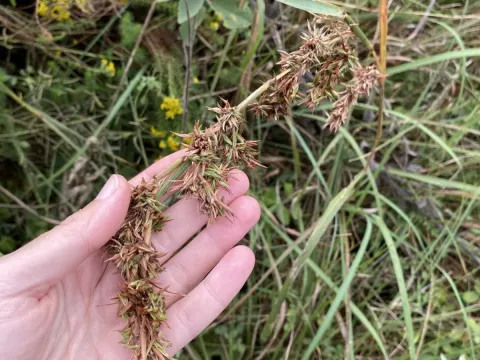
Citronella
Cymbopogon nardus
Citronella (Cymbopogon nardus) is a perennial grass, typically propagated vegetatively through clump division. Planting is performed at the beginning of the rainy season to ensure young plants receive sufficient moisture for rooting.
What the section contains
Citronella
On a commercial scale, plantations are established with a density of approximately 10,000 to 15,000 plants per hectare. This spacing between rows ensures adequate room for root system development.
When using seed propagation, sowing is carried out in prepared nurseries followed by transplanting into open ground once seedlings reach 15–20 centimeters in height. It is crucial to maintain a planting depth of no more than 1–2 centimeters.
The optimal timing for establishing new plots depends on regional climate, though the key factor remains soil temperature, which should reach a stable 20–25 degrees Celsius.
Regular rejuvenation of the plantations is recommended every 3–5 years, as the essential oil yield efficiency of the clumps decreases significantly with age.
This crop belongs to the Poaceae (grass) family and requires a tropical or subtropical climate for optimal growth. The ideal temperature range for vegetation is between 20 and 30 degrees Celsius.
Citronella is extremely sensitive to frost and prolonged drought, necessitating regular irrigation during hot seasons. The preferred soil types are light, well-drained loams or sandy soils with a pH level ranging from 5.5 to 7.5.
The plant is light-loving, so sites must be open and sheltered from strong winds that can damage the long, narrow leaves. Waterlogging in the soil must be avoided, as it leads to root system rot.
For high essential oil content, the plant requires sufficient solar radiation; therefore, in conditions of low sunlight, raw material quality tends to decline.
The application of mineral fertilizers rich in nitrogen and potassium positively impacts biomass and the accumulation of citronellal within the oil.
The average yield of green citronella mass varies widely depending on agrotechnics and plantation age, generally ranging from 15 to 25 tons of raw material per hectare annually.
Essential oil is extracted via steam distillation from fresh or slightly wilted aerial parts of the plant. The oil yield is approximately 0.5–1% of the initial raw material weight.
Harvesting is conducted several times a year, allowing for consistent income from the plantation throughout the entire active growing cycle.
The intensity of organic fertilizer application directly correlates with the volume of aromatic compound accumulation in the plant's leaves.
Optimizing harvest timing allows for maximum concentrations of citronellal and geraniol, which increases the commercial value of the final product.
The primary diseases affecting citronella are fungal infections, such as leaf rust and leaf spot, which occur during periods of high humidity and poor air circulation within the clumps.
Among pests, soil nematodes are the most dangerous, as they exhaust the root system, leading to gradual wilting and reduced overall plant vitality.
Under improper care, infestations of aphids or spider mites are possible, especially during dry, hot periods with insufficient irrigation.
Control measures include proper crop rotation, regular weeding of inter-row spaces to remove infection reservoirs, and timely removal of affected plant parts.
Preventive treatment with biofungicides during high-humidity seasons allows for effective control of fungal pathogen spread across the plantation.
Harvesting begins when the clumps reach sufficient maturity, usually 6–8 months after the first stage of planting on the plantation.
Mowing is performed at a height of approximately 10–15 centimeters above ground level to stimulate rapid regrowth of new shoots for the subsequent cycle.
Freshly harvested mass must be processed as quickly as possible, preferably within 24 hours, as prolonged storage leads to the evaporation of essential oils.
Specialized machinery is used for transportation to distillation plants, minimizing mechanical damage to the leaves prior to the shredding process.
In commercial conditions, the harvest cycle is repeated up to 3–4 times per year, requiring precise planning to maintain the health of the mother clumps.