
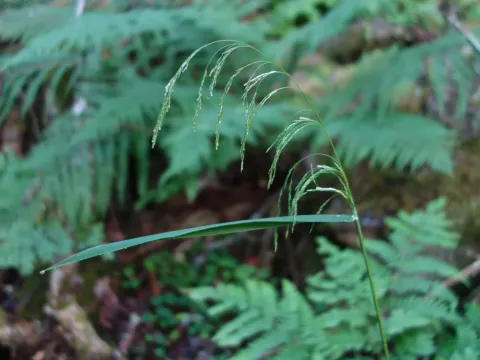
Cinna
Cinna
The genus Cinna belongs to the family Poaceae, encompassing perennial grasses primarily found in damp woodlands and wetlands. These plants are characterized by their shade tolerance and preference for moist, nutrient-rich environments.
What the section contains

Cinna
To cultivate Cinna successfully, one must ensure a consistent supply of moisture. The plant thrives in soils with high organic matter content and generally performs best in cool to moderate temperate climates where summer heat is not excessive.
Soil drainage is essential despite the plant's love for moisture; stagnant water that lacks oxygen can hinder root health. Ideal substrates are loamy or silty soils that maintain adequate water retention while allowing for gas exchange.
Regarding light requirements, Cinna is distinct from many other forage grasses due to its natural adaptation to forest edges. This allows it to be integrated into silvopasture systems where full sun is not available.
Agronomic management should focus on soil fertility maintenance, specifically nitrogen levels, which are critical for the production of biomass. Periodic fertilization is recommended to sustain healthy vegetative development.
Pathogens such as rust fungi often affect Cinna, especially in dense stands with poor airflow and high humidity. These diseases manifest as pustules on the foliage, which can significantly reduce the quality of the forage.
Insects like aphids are common pests in grass cultivation. They feed on plant sap, and in high populations, they can stunt growth and introduce viral pathogens to the grass stand, affecting yield stability.
Stem-boring insects may occasionally cause damage by disrupting the flow of nutrients within the culm. Management strategies should include scouting during the peak growing season to detect early signs of infestation.
To control threats effectively, implementing integrated pest management (IPM) is advised. This includes maintaining moderate plant density to ensure sufficient ventilation, which discourages the development of fungal spores.
In cases of severe infestation, targeted applications of systemic pesticides may be required. However, producers are encouraged to favor environmentally friendly biological controls whenever possible to maintain sustainable production.