
Club bent
Agrostis clavata
Description
Sowing dates
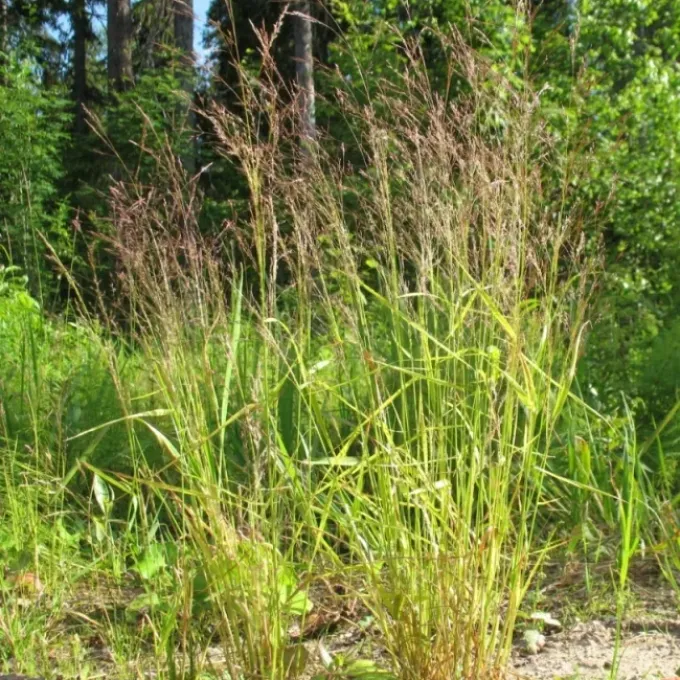
Club bent (Agrostis clavata) is a perennial grass species belonging to the Poaceae family. It is recognized for its role as a persistent and nutritious forage component in native meadows and developed grazing lands.
Originating in the temperate and subarctic regions of Eurasia, this grass is well-adapted to cooler climates. Its range spans across Siberia and parts of Northern Europe, where it thrives in diverse moisture-retentive ecosystems.
Morphologically, the plant is characterized by its open, tufted growth habit and distinct club-shaped panicles. This unique inflorescence shape is the primary identifier for this specific species within the diverse Agrostis genus.
In agricultural practice, this grass is utilized for hay production and as a foundational species for pasture improvement. It provides a soft, palatable biomass that remains high in nutritional value throughout the growing season.
Sowing should ideally occur in early spring to take advantage of soil moisture. Shallow seeding is critical, as the small seeds require minimal cover to germinate effectively and establish a strong root system during the initial phase.
Growing requirements
This grass is highly resilient to cold temperatures, making it suitable for high-latitude farming. It exhibits impressive winter hardiness, allowing it to survive extreme conditions that would be detrimental to less adapted cultivars.
Regarding soil preferences, Agrostis clavata flourishes in loamy and organic-rich soils. While it tolerates a variety of soil types, it performs best when provided with consistent moisture and slightly acidic to neutral soil pH.
Agrotechnical management requires strategic fertilization to maintain high yields. Nitrogen applications early in the spring are essential for promoting vegetative growth and density, while phosphorous helps support root development.
Water management is crucial during the peak growing season. Although the species is tolerant of periodic flooding, it does not handle prolonged drought well, necessitating irrigation in areas prone to late-summer moisture deficits.
Regular harvesting or grazing cycles help maintain the quality of the stand. By preventing the plants from becoming overly mature and lignified, farmers ensure a continuous supply of highly digestible forage for livestock.
Main diseases and pests
The primary pathological threats to this grass include various rust fungi. These diseases typically manifest as yellow or brown pustules on the leaf surfaces, which can significantly reduce the photosynthetic capacity of the plants.
Powdery mildew can also occur in dense stands with poor air circulation. Managing plant density and timing harvests correctly are effective ways to mitigate the risk of these fungal outbreaks in intensive forage systems.
Insect pests such as grass aphids and stem-boring larvae pose a constant threat to the yield of the green mass. Infestations can cause stunted growth and a general decline in the vitality of the entire pasture block.
Integrated pest management (IPM) is the recommended approach for protecting crops. This includes monitoring for early signs of damage and using selective treatments only when necessary, alongside preserving natural predator populations.
Weed competition is a significant concern during the establishment phase. Ensuring a clean seedbed and providing early-stage nitrogen boosts can help the crop canopy close rapidly, effectively suppressing the encroachment of invasive species.