
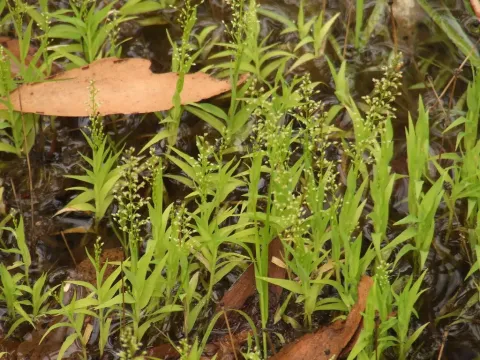
Coelachne
Coelachne
The genus Coelachne, belonging to the Poaceae family, consists of specialized grass species primarily found in tropical and subtropical regions. These plants are known for their ability to thrive in aquatic or semi-aquatic habitats, such as wetlands, marshes, and rice paddy margins.
What the section contains


Coelachne
Botanically, Coelachne is characterized by slender culms and delicate panicle inflorescences. Many species in this genus exhibit prostrate or semi-erect growth habits, with nodal rooting that allows the plants to spread rapidly across moist or saturated soil surfaces.
The climatic requirements for Coelachne center on constant high humidity and warm temperatures. These plants are true hydrophytes, meaning they require a consistent water source to maintain physiological functions, making them intolerant of prolonged drought conditions.
Regarding soil, Coelachne prefers nutrient-rich alluvial soils or muck soils common in wetland ecosystems. They are highly efficient at extracting nutrients from waterlogged environments where nitrogen and phosphorus availability might otherwise be inhibited by anaerobic conditions.
From a хозяйственное standpoint, these grasses serve as valuable forage in wetland ecosystems. In regions where they grow, they provide a reliable source of green fodder for livestock, especially during rainy seasons when upland pastures may become inaccessible or damaged.
The most significant threat to Coelachne populations is the modification of hydrological patterns. Large-scale drainage or irrigation management intended to transform wetlands into dry farmland effectively eliminates the habitat required for these plants to survive.
Pest pressure on Coelachne is consistent with other wetland graminoids. Grasshoppers and certain types of leaf-eating larvae pose the most common threat, often causing foliage damage that limits the photosynthetic capacity of the plant during the peak growing season.
Fungal pathogens, particularly those causing leaf blight and various rusts, occur frequently in humid, enclosed environments. These diseases can negatively affect both the yield and the nutritional quality of the forage provided by Coelachne stands.
Integrated management is difficult due to the ecological fragility of their native environment. Strategies usually focus on sustainable grazing intervals, allowing the plants sufficient time to recover their root reserves before being subjected to re-grazing by livestock.
Resistance to biotic stressors is inherent to the genus due to its evolved adaptation to harsh, wet conditions. Their rapid growth cycle enables them to outpace minor herbivory, ensuring survival even in areas with high grazing pressure, provided the hydrological balance remains intact.