
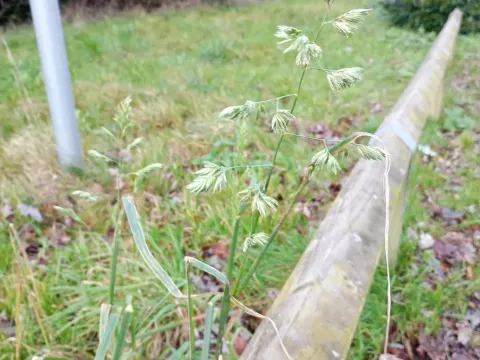
Cock's-foot
Dactylis L.
Cock's-foot is a robust perennial grass that is best sown in early spring when soil conditions are cool and moist, promoting rapid germination.
What the section contains

Cock's-foot
Late summer sowing is also a viable option, provided that there is sufficient soil moisture or irrigation available to support seedling establishment.
The recommended seeding rate is generally between 10 and 15 kg/ha, depending on whether it is sown as a pure stand or in a mix with legumes.
Proper seedbed preparation is crucial; the soil should be firm and fine-textured to ensure good seed-to-soil contact for optimal emergence.
In mixed swards, it is often paired with clover or alfalfa, which helps fix nitrogen and improves the overall protein quality of the harvested forage.
As a member of the Poaceae family, cock's-foot is known for its high ecological flexibility and ability to thrive on various soil types.
It prefers fertile, well-drained loamy soils but can tolerate a wider range of conditions than many other cultivated forage species.
The plant demonstrates good shade tolerance, allowing it to grow effectively in orchards or near field margins where sunlight is intermittent.
While it has moderate drought resistance, it performs best in regions with reliable rainfall and does not tolerate long periods of waterlogging.
It is relatively winter-hardy and can withstand cold temperatures, making it a reliable choice for temperate climate agricultural systems.
Cock's-foot is highly valued for its high biomass production, capable of producing significant yields of forage across multiple cuts each season.
Yields can reach 8–12 tonnes of dry matter per hectare with appropriate fertilization, particularly nitrogen inputs which boost leaf production.
The grass is known for its rapid regrowth after cutting or grazing, which significantly enhances the overall seasonal productivity of the pasture.
Maintaining proper fertility levels is essential to keep the stand productive, as the plant can deplete soil nutrients over several years of growth.
When managed correctly, a stand of cock's-foot can remain productive for 5 to 10 years, providing consistent feed for livestock operations.
Rust diseases are among the most common threats to cock's-foot, often appearing during warm and humid weather and impacting foliage quality.
Powdery mildew can also affect dense stands, especially in areas with poor airflow, potentially reducing the nutritional value of the harvest.
Common pests such as cereal flies and aphids can cause damage during the early establishment phase, potentially thinning out the crop stand.
Integrated pest management, including regular mowing and using resistant cultivars, is the most effective way to maintain healthy grass stands.
Good field hygiene, such as removing crop debris and ensuring adequate field drainage, helps mitigate the prevalence of many fungal pathogens.
The ideal time to harvest for hay is at the early heading stage, before the stems become overly lignified and lose their digestibility.
Delaying the harvest results in a decrease in protein content and lower intake rates by livestock due to the increased fibre in the mature plant.
Seed harvesting should be timed carefully when the seeds reach full maturity to avoid shattering losses during the combining process.
Post-harvest management is vital; forage should be dried properly to prevent heating and mould growth, ensuring safe long-term storage.
For grazing systems, rotational management is key to prevent overgrazing and to encourage the plant to tiller, which maintains pasture density.