
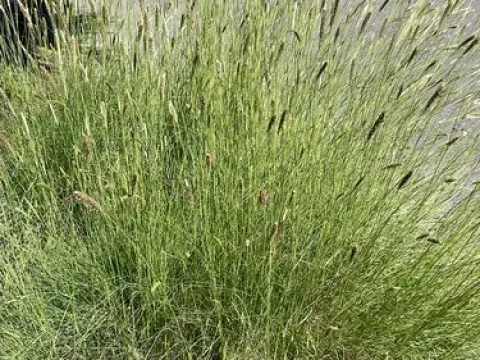
Cenchrus sphacelatus
Cenchrus sphacelatus
Sowing of Cenchrus sphacelatus is generally recommended when temperatures are consistently warm, with soil temperatures reaching at least 15-18 degrees Celsius.
What the section contains
Cenchrus sphacelatus
The optimal time for planting is the beginning of the rainy season or spring, provided there is enough soil moisture to support initial germination and root establishment.
Seeding rates typically range from 5 to 10 kg per hectare, depending on the planting method and the viability of the seeds used for the establishment of the stand.
Seeds should be sown at a shallow depth of 1-2 centimeters, ensuring good soil-to-seed contact to prevent the seeds from drying out before they germinate.
After seeding, rolling the field is advised to compress the soil lightly, which helps maintain surface moisture and promotes uniform emergence of the seedlings.
Cenchrus sphacelatus belongs to the Poaceae family and is a heat-loving perennial grass characterized by its significant adaptability to various soil types.
The plant thrives best in well-drained loamy or sandy soils with a neutral pH level, while it performs poorly in soils prone to waterlogging or anaerobic conditions.
This grass is highly drought-tolerant due to its deep and extensive root system, allowing it to maintain productivity in regions characterized by erratic rainfall.
The crop is highly light-demanding, meaning it requires full sun exposure to maintain high growth rates and overall vigor throughout the growing season.
Applying nitrogen-based fertilizers during the early vegetative stage is highly recommended to stimulate leaf development and improve the nutritional value of the biomass.
The green biomass yield of Cenchrus sphacelatus can range from 15 to 30 tons per hectare, provided that proper fertilization and management practices are applied.
The crop offers multiple cuttings per season, making it an economically viable option for integration into standard crop rotation cycles in livestock operations.
The nutritional value and quantity depend heavily on the maturity stage at harvest; early cutting ensures a product with higher protein levels and better digestibility.
When used for grazing, it is valued by livestock for its palatability, provided that the rotation is managed to avoid overgrazing and maintain plant health.
Irrigation can significantly boost production levels in areas prone to summer heat waves, ensuring continuous growth throughout the entire season.
Fungal diseases such as rusts and various leaf spots are the primary threats, especially in humid environments where air circulation within the stand is limited.
Common agricultural pests like aphids or caterpillars may attack the foliage, which can suppress growth rates if the infestation remains uncontrolled for too long.
Overgrazing or cutting too frequently without allowing sufficient recovery time can weaken the grass, leading to weed encroachment and eventual stand degradation.
Preventive measures include maintaining proper plant density and regular field monitoring to detect early signs of disease or pest outbreaks before they become severe.
When chemical intervention is required, only approved insecticides should be used, with careful attention paid to the pre-harvest interval for grazing or cutting.
Harvesting for hay is most effective at the early flowering stage when the plant reaches its peak nutritional quality before nutrients are moved to seed heads.
For silage or haylage production, the biomass should be chopped and fermented, which helps to preserve its quality for winter feeding programs.
A stubble height of at least 5-7 centimeters must be maintained during harvest to encourage rapid regrowth and ensure the longevity of the perennial stand.
Using professional machinery for mowing allows for a uniform cut, which contributes to more balanced recovery and stronger root system development over time.
Once harvested, the material should be processed or stored quickly to minimize nutritional loss caused by exposure to sun and potential rain showers.