
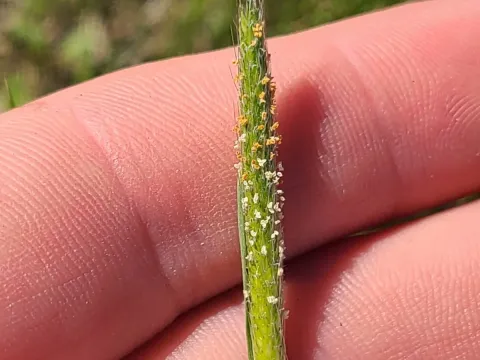
Carolina foxtail
Alopecurus carolinianus
Carolina foxtail is an annual grass, and the optimal timing for sowing depends heavily on local climatic conditions, typically following a cool-season growth pattern.
What the section contains
Carolina foxtail
In regions with mild winters, autumn sowing is highly recommended as it allows the root system to establish before the onset of the spring growth spurt.
Seeds should be planted at a shallow depth of approximately 1 to 2 centimeters to ensure they receive enough moisture to germinate without exhausting their energy reserves.
For areas with severe winters, early spring seeding is preferred, performed as soon as the soil becomes workable to maximize the vegetative period before summer heat.
Proper seedbed preparation, including firming the soil to ensure good seed-to-soil contact, is essential for achieving a uniform stand and high plant density.
Belonging to the Poaceae family, Carolina foxtail thrives best in environments with moist or wet soil conditions, often found in low-lying areas or floodplains.
The plant prefers heavy-textured soils, such as clays and silts, which have the high water-holding capacity necessary to support its shallow root system during the season.
Regarding climate, the plant is well-adapted to cooler temperatures and shows its highest growth rates during wet, temperate weather, making it sensitive to extreme drought.
Adequate soil fertility is crucial; regular nitrogen applications are often required to maintain high protein levels and biomass production throughout the growing cycle.
Carolina foxtail requires full sunlight for optimal development; overcrowding or planting in heavily shaded areas should be avoided to prevent stem lodging and disease.
The biomass yield of Carolina foxtail varies based on soil moisture availability and management practices, with high potential in well-managed, moist meadows.
Forage quality is highest during the vegetative stage, specifically just before heading, when the ratio of leaves to stems is at its peak for nutritional value.
In irrigated fields or areas with consistent rainfall, the plant can produce a significant amount of fodder, contributing effectively to seasonal pasture production.
The grass is known for its ability to tiller prolifically, which helps maintain ground cover and compensates for uneven plant distribution in the field.
Managing the harvest schedule is key to yield success; timing the cut before the plant matures into its reproductive phase prevents a decline in forage quality.
Common pathological threats include rust and powdery mildew, which can become prevalent in fields with poor air circulation or high ambient humidity levels.
Insect pests, such as aphids and various cereal flies, can compromise the health of young seedlings, necessitating regular field scouting during the early growth phase.
Root rot diseases may occur in poorly drained soils where water stagnation creates an environment conducive to fungal pathogens, weakening the overall plant stand.
- Stem rust.
- Powdery mildew.
- Aphid infestations.
- Cereal leaf beetle.
Integrated pest management strategies, such as crop rotation and the application of targeted fungicides, are recommended for maintaining a healthy and productive crop.
Harvesting for hay should be completed at the early heading stage to capture the best balance between total dry matter yield and nutritional quality for livestock.
If utilizing the grass for silage, it is critical to ensure proper moisture management during ensiling to prevent the development of spoilage organisms in the feed.
Seed production requires harvesting when the seed heads reach maturity, typically done via direct combining to minimize the risk of seed loss due to shattering.
After the final harvest, managing field residues is important to prepare the land for subsequent cycles and to reduce the overwintering potential of pathogens.
Proper storage of hay in dry, well-ventilated barns is essential to prevent moisture accumulation and to maintain the forage's integrity until it is needed for feed.