
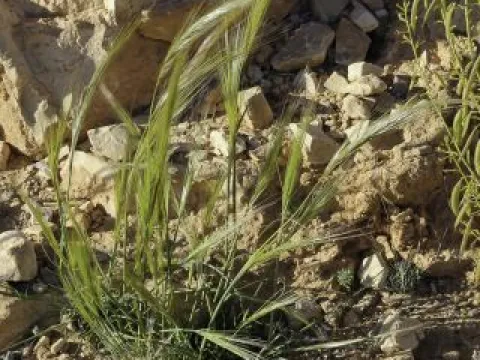
Cape needlegrass
Stipa capensis
Cape needlegrass (Stipa capensis) is a grass species belonging to the Poaceae family. It is an annual plant native to the Mediterranean region, North Africa, and parts of the Middle East, adapted to arid and semi-arid environments.
What the section contains
Cape needlegrass
This species thrives in well-drained, sandy, or rocky soils, showcasing its evolution as a xerophyte. It is highly intolerant of waterlogged soil conditions, which can quickly lead to root decay in cultivated environments.
The plant requires full sun exposure and is capable of enduring high temperatures and significant drought periods. Its physiological structure is optimized for water conservation, making it a potential candidate for land restoration in dry climates.
Morphologically, Stipa capensis is characterized by its sharp awns, which aid in seed dispersal. In agricultural settings, these awns are a significant factor to manage, as they can be invasive in terms of mechanical movement and potential impact on livestock.
Optimal growth is achieved in climates with cool, moist winters followed by hot, dry springs. It does not require high levels of soil fertility and generally performs poorly if over-fertilized, which can weaken the plant's natural resistance.
Primary threats to Cape needlegrass include various rust fungi (Puccinia spp.), which can compromise leaf health during periods of unexpected high humidity or stagnant air.
Insect pests, such as cereal aphids and various grass-feeding larvae, pose a risk during the seedling stage. These can lead to stunted growth if left unmanaged during the early phases of development.
Mechanical damage to livestock is a critical concern due to the plant's sharp awns. In grazing management, it is crucial to monitor the growth stage to ensure the grass is harvested or grazed before the awns become rigid and dangerous.
Fungal diseases like Fusarium may develop if the plant is subjected to poor crop rotation or if debris from the previous season is not cleared, providing a reservoir for infection.
Effective management includes maintaining appropriate plant density to ensure adequate airflow, which is the best cultural control method against most fungal pathogens that affect this species.