
Canary melic
Melica canariensis
Description
Growing requirements
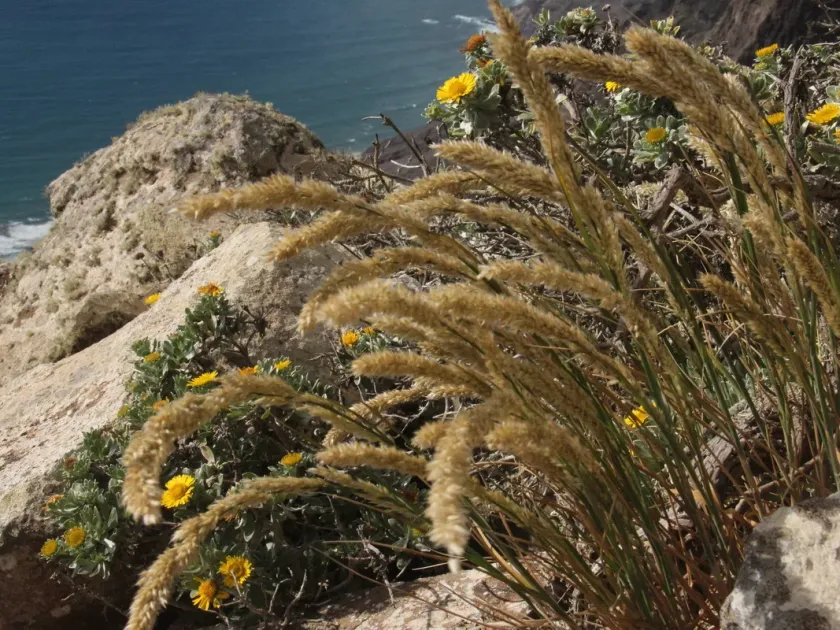
Canary melic (Melica canariensis) is a perennial grass species belonging to the family Poaceae. This plant is native to the Canary Islands, where it has evolved to thrive in specific volcanic and arid environments.
The plant demonstrates a strong preference for well-drained, sandy, or rocky soil types. Proper aeration of the root system is essential for its development, and the species is highly sensitive to waterlogged conditions that can cause decay.
Botanically, it forms compact tussocks, which is an adaptation to help retain moisture and survive in windy, exposed island habitats. Its leaves are thin and resilient, designed to endure long periods of drought without losing vital physiological functions.
In terms of climatic needs, Melica canariensis requires consistent exposure to sunlight and thrives in Mediterranean-type climates. It is adapted to mild winters and needs protection from hard frosts, which can damage the tender growth of the tufts.
Regarding its utility, while it is primarily valued for its ornamental characteristics in xeriscaping, it also serves an ecological role in stabilizing soil on slopes and preventing erosion in its native Mediterranean habitats.
Main diseases and pests
The primary threats to Canary melic are root rot diseases, which typically develop under conditions of poor drainage and excessive moisture, particularly during cooler seasons.
Pest pressure often includes aphids that target the succulent young shoots of the plant, potentially leading to stunted growth if left unmanaged in nursery conditions.
Fungal infections, such as leaf spot diseases, can occur if the plant is kept in environments with high humidity and stagnant air, making proper spacing and ventilation essential.
Soil-borne pathogens represent a significant risk, especially when the plant is introduced to non-native soils that may contain different fungal or bacterial compositions.
Preventive agricultural practices include maintaining a balanced irrigation schedule, utilizing substrates with excellent permeability, and regular monitoring for signs of infestation.