
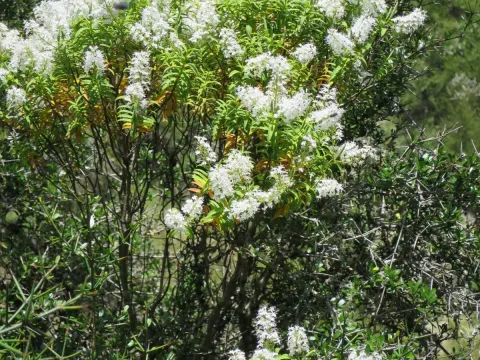
Veronica traversii
Veronica traversii
Veronica traversii is a perennial evergreen shrub belonging to the Plantaginaceae family. Native to New Zealand, this hardy species is prized for its tidy, rounded habit and ability to retain foliage year-round in mild climates.
What the section contains
Veronica traversii
The plant features small, elliptical leaves that are densely packed along the stems. In early summer, it produces delicate, white-to-lavender racemes that create a stunning contrast against the deep green, glossy foliage.
Optimal growth is achieved in well-draining, moderately fertile soil. Veronica traversii thrives in full sun but tolerates partial shade, making it a versatile choice for various garden positions, including borders and coastal landscapes.
Cultural requirements include consistent but moderate watering. It is crucial to ensure that the soil does not become waterlogged, as this can lead to root system decay, especially during cooler winter months.
In terms of usage, this shrub is excellent for mass planting, rock gardens, and low hedges. Its resilient nature makes it a reliable choice for gardeners looking for low-maintenance structure in their outdoor spaces.
The most common pests affecting Veronica traversii are aphids and spider mites. These insects tend to congregate on the undersides of leaves or on new growth, potentially causing yellowing and stunted development if left untreated.
Fungal diseases, including root rot and powdery mildew, represent the primary health risks for this shrub. These conditions are typically exacerbated by high humidity, poor air circulation, or heavy, damp soil conditions.
To prevent disease outbreaks, proper pruning is essential to maintain airflow within the canopy. Removing dead or damaged branches helps minimize the spread of spores and keeps the plant looking aesthetically pleasing.
Chemical control, such as applying insecticidal soaps or specific fungicides, should be used responsibly and only when necessary. Always apply treatments during the cooler parts of the day to avoid leaf scorch.
Monitoring the plant regularly for early signs of infestation is the most effective way to protect your garden. Healthy, well-nourished plants are significantly more resistant to environmental stressors and pest attacks.