
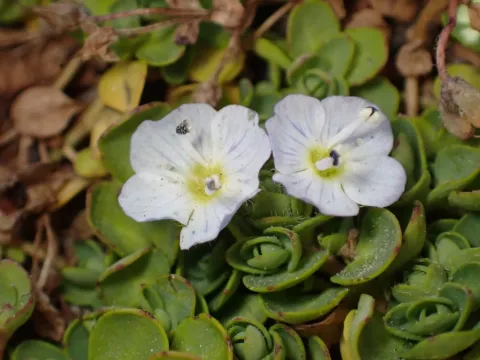
Veronica telephiifolia
Veronica telephiifolia
Veronica telephiifolia is a perennial herbaceous plant belonging to the Plantaginaceae family. While not a conventional agricultural crop, it is a significant species in alpine botany and specialised rock gardening, known for its unique adaptation to extreme mountain environments.
What the section contains
Veronica telephiifolia
The natural range of this species is limited to the high-altitude zones of the Pyrenees mountains. It is strictly adapted to rocky habitats where the climate is characterized by high UV exposure, strong winds, and a very short period suitable for active vegetative growth.
The botanical profile of the plant is marked by fleshy, succulent-like leaves which act as an adaptation to drought conditions in crevices. The plant grows in dense, low-lying mats, providing stability against the harsh climate of high mountain ridges.
Regarding cultivation requirements, the species demands excellent drainage and a mineral-rich, low-nutrient substrate. It struggles in standard garden soil as it requires constant aeration around the root zone and protection from excessive winter moisture.
For successful growth, it is crucial to provide a position with high light intensity. The soil should consist of a mix of gravel and coarse sand, mimicking the conditions of alpine screes where water drains rapidly after precipitation.
The primary threats to Veronica telephiifolia in garden settings involve fungal diseases triggered by poor air circulation and high humidity. Root rot is a lethal condition that often occurs when the plant is subjected to stagnant moisture and insufficient drainage.
Pests such as slugs and snails represent a major threat, particularly during cool and damp seasons. They can significantly damage the succulent foliage, leaving the plant vulnerable to secondary infections or structural collapse.
Aphid infestations may occur during the flowering season, targeting the buds and flowers. This stress can weaken the individual plant, reducing its long-term viability and seed production efficiency in an already challenging environment.
Environmental stress, especially sudden temperature fluctuations during the dormant winter period, can lead to tissue damage. Such injuries facilitate the entry of pathogens that exploit the weakened defensive systems of the plant.
Competition from more aggressive plant species, often encouraged by nitrogen runoff in the vicinity of its habitat, can lead to the displacement of Veronica telephiifolia. It is a slow-growing species that lacks the competitive ability to thrive in nutrient-rich environments.